The post As vaccinations resume, health pros cautioned about selfies on social media appeared first on Medicine Matters.
]]>COVID-19 vaccinations are expected to resume again in the next few weeks after a lull due to vaccine scarcity from suppliers. Selfie photos posted on social media of individuals getting vaccinated can trigger negative emotions on the part of those waiting for vaccinations. A commentary on this is by Ben Huang, an emergency medicine resident at the University of B.C. who is also a Global Journalism Fellow at the Dalla Lana School of Public Health at the University of Toronto.
BY BEN HUANG
As doctors across Canada receive COVID-19 vaccines, many are sharing photographs on social media to inspire hope and to encourage others to get vaccinated too.
This has sparked controversy around “vaccine selfies,” as other doctors say the pictures provoke anxiety, anger and envy.
The debate among doctors over how to use social media is merely the tip of the iceberg, with inequalities in Canada’s slow and irregular vaccine rollout at the root of the frustrations.
Studies over the past decade have demonstrated links between browsing social media and depressive symptoms, especially when online content triggers envy. And during the COVID-19 pandemic, vaccine envy is inevitable, with vaccines being limited and the pandemic continuing to rapidly grow.
By all means celebrate, but celebrate privately….We get it—we’re happy for you. Just don’t rub salt in our wounds.
Social media triggers
For some health-care workers, social media selfies are an unwelcome trigger.
“Social media is complicated,” says Dr. Amelia Yip, a cardiologist in Waterloo, Ont., who recently received her first dose vaccine. “Even within the healthcare profession, there are people who should be getting it before others. But the way it’s being rolled out doesn’t always work that way.”
“The way the distribution is happening, it feels like there isn’t a coordinated effort. It feels under-appreciative for healthcare workers, or even those at risk, not just doctors,” says Dr. Yip.
Canada’s vaccine rollout has been highly variable between provinces. In Ontario, for example, almost 19% of vaccinated people have completed both doses, compared to only 1.5% in British Columbia.
And in Québec, where second doses are being postponed significantly until mid-March, no one has yet received two doses.
Dr. Yip says there are pockets of people who have been missed in her local rollout, and that at her hospital, cardiologists had to remind authorities that they, too, are involved in critical care.
Meanwhile, says Dr. Yip, it’s been doubly frustrating to see vaccine selfies posted by people who don’t work on the frontlines.
“Yesterday, a completely non-medical person who’s an accountant and happens to work at a Toronto hospital got it. When you see someone not even working [with COVID-19 patients] getting it, it feels like the person is jumping the queue.”
Anger and resignation
The vaccine rollout in B.C. has featured similar criticisms and controversies around queue-jumping by doctors and administrators.
Dr. Alan Drummond, an emergency physician in Perth, Ont., where frontline workers are still waiting for word of vaccines, says: “You have to take the broader context to understand where some of the disappointment and anger is coming from. For at least 10 months, ER physicians and nurses were dealing with a novel virus that has the potential to be quite deadly. I don’t know anybody in my sphere who shied away from the responsibilities of looking after patients—nobody.”
Dr. Drummond says the initial arrival of vaccines in Canada was met with hope and enthusiasm, and that it was “entirely appropriate” that doctors celebrated on social media as a sign of the beginning of change.
But as selfies continue to get posted online, Dr. Drummond says he and his colleagues are beginning to feel resigned and angry.
“The inequities are starting to show…. We need an appropriate queue—we certainly aren’t in it. And [the selfies are] the icing on the cake.”
Impacts of stress
Stress due to providing care to coronavirus patients has significant consequences. Frontline doctors, nurses and therapists are burned out. Tragically, 35-year-old Dr. Karine Dion recently died by suicide. Emergency and intensive care doctors have also reported feeling overwhelmed.
Dr. Sarah Giles, a rural family and emergency doctor in Kenora, Ont., says her community will not be receiving vaccines until April.
“When we look at inequalities, we know that there is a lifespan discrepancy between living in northwest Ontario and in southern Ontario. As my friend said, we’re at the end of the supply for fruits and vegetables and you can tell: We’re at the end for vaccines as well.”
And especially in rural communities, says Dr. Giles, every healthcare worker is paramount.
“We have human resources issues. If we lose a couple of doctors or nurses, it’s going to be a big problem.”
For Dr. Giles, who lives alone, vaccine selfies have been personally anxiety-provoking; she says when she gets vaccinated, she will not post a selfie.
As for Dr. Drummond, he has this message for doctors: “By all means celebrate, but celebrate privately. Just don’t do it so publicly when a lot of your colleagues who are dealing with their own anxieties and fears. We get it—we’re happy for you. Just don’t rub salt in our wounds.”
This article is republished from The Conversation under a Creative Commons license. Read the original article.
RELATED ARTICLES:
Physicians face disciplinary action for queue jumping
Investigations over into hospital doctors who jumped queues for 2nd COVID-19 shots
The post As vaccinations resume, health pros cautioned about selfies on social media appeared first on Medicine Matters.
]]>The post COVID-19 cases rise 34% among B.C. healthcare workers in past month alone appeared first on Medicine Matters.
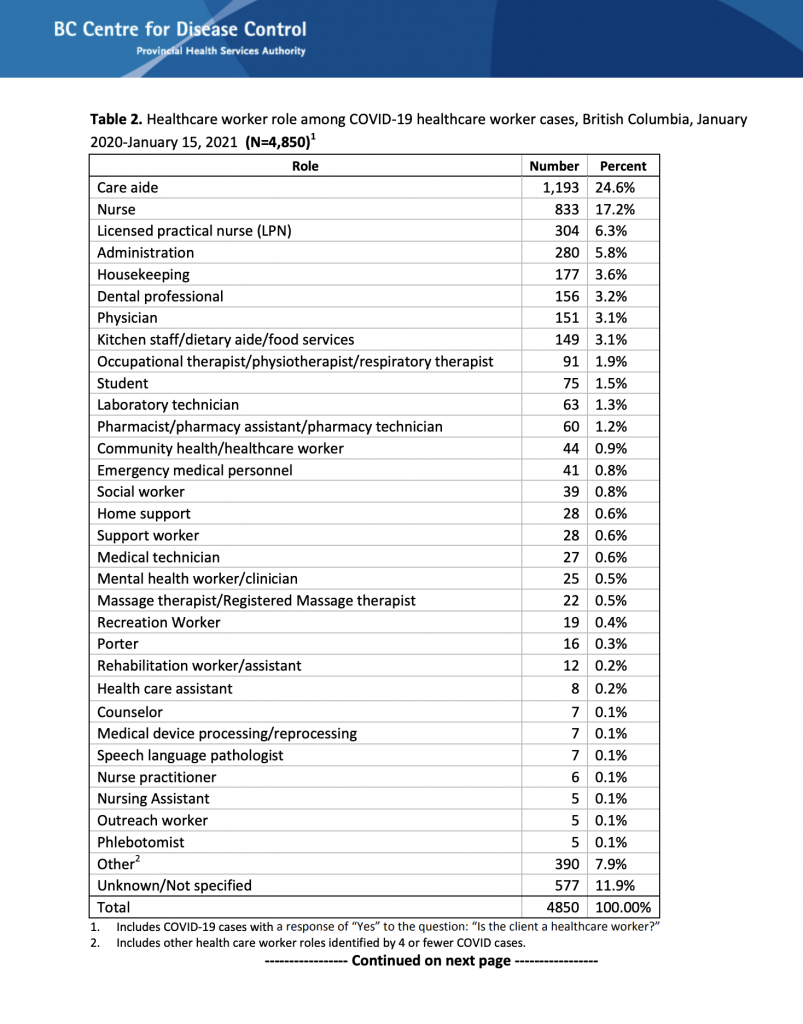
]]>COVID-19 infections continue to rise amongst B.C. healthcare workers as data just released shows the cumulative number of infections rose 34% in the past month, to 4,850.
The count provided by the B.C. Centre for Disease Control only goes up to January 15 when there were a total of about 60,000 COVID cases in the province. As of today, there are over 68,000 cases so it is likely there have now been somewhere around 5,400 infections among healthcare workers since the pandemic began. In mid-December, there were 3,624 cumulative cases among healthcare workers.
The good news, if you can call it that, is that COVID-19 infections among healthcare workers continue to account for just over eight percent of all cases in B.C. That proportion has not risen for a few months. As well, first vaccinations have been completed among all staff and residents of long-term care facilities so infections in LTC sector staff should start to fall.
Care aides who most commonly work in LTC facilities and nurses in various categories – RN, nurse practitioner and licensed practical – continue to head the list. As you will see from the table below, care aides account for about 25% of all infections in the healthcare sector while nurses are a close second, accounting for another 24%.
Cases among dental professionals (156) slightly outnumber those in physicians (151). The only professionals who’ve been vaccinated so far in B.C. are those who work in intensive care units, emergency departments and COVID units. That means healthcare workers like nurses, dentists and physicians not providing direct care to COVID-19 patients have not yet been inoculated.
The government and Dr. Bonnie Henry continually emphasize that not all COVID infections are contracted on the job. But it is clear that wherever healthcare workers acquire COVID-19, they are vulnerable and carry a heavy burden when it comes to the virus. A category called unknown/unspecified has 577 cases. That means individuals answered yes when they were asked during testing if they worked in healthcare but they declined to provide more information about their occupation.
In an ideal world, every healthcare worker would be getting vaccinated now. But the supply for most of February has dried up because of modifications to vaccine production facilities in Belgium.
 RELATED ARTICLES:
151% rise in COVID-19 cases in healthcare workers
Steep rise in COVID cases in healthcare sector
25% of COVID cases have been in healthcare workers
Growing number of cases among healthcare workers
The post COVID-19 cases rise 34% among B.C. healthcare workers in past month alone appeared first on Medicine Matters.
]]>The post Investigations over into hospital doctors who jumped queues for 2nd COVID-19 shots appeared first on Medicine Matters.
]]>Vancouver health authorities have completed their investigations into hospital-based physicians who jumped COVID-19 vaccination queues by not waiting for their second dose “invitations.”
“While we are unable to disclose the details of specific personnel cases, we can confirm that the medical staff who have had received their second dose before they were invited to do so was limited and each case has been formally investigated and appropriate action has been or will be taken,” said Vancouver Coastal Health spokeswoman Rachel Galligan.
I first reported on the controversy here after obtaining the internal memo circulated to the medical staff at hospitals like Vancouver General and St. Paul’s. The identity of the physicians is a closely guarded secret, but since the only doctors who’ve been able to access COVID vaccinations thus far are those providing care to COVID patients, they are likely critical care specialists, emergency department physicians or other specialists working on COVID units.
“The vast majority of our health-care workers and medical staff are adhering to public health guidance and are patiently awaiting their turn for vaccination,” Galligan continued. “VCH and Providence Health Care are committed to fully investigating and addressing any substantiated breaches of Public Health direction regarding vaccine sequencing and administration.”
Meanwhile, the vanishing and indeed near-extinct supply of COVID-19 vaccine means that many first priority physicians, nurses and other healthcare workers – those providing direct patient care to COVID-19 patients – will likely miss recommended timelines for their second shots. The two vaccines approved in Canada so far — PfizerBioNTech and Moderna’s — both require two separate doses in order to achieve 94-95% protection for the patient. Pfizer’s second dose is intended to be delivered 21 days after the first, while Moderna recommends 28 days after the first. But the World Health Organization and the National Advisory Committee on Immunization (NACI) have each given support for up to 42 days between doses because of extraordinary supply issues.
Provincial health officer Dr. Bonnie Henry was among the first doctors to get vaccinated last month when the first shipments arrived. It’s now been 38 days since Dr. Henry’s first dose, so I dared to ask the ministry of health whether she has had her second shot or when she intends to get it. Her office staff declined to divulge anything yesterday. Today, at the end of an hour-long press briefing, Henry said she has not received her second dose:
“I absolutely believe in the data that we have that shows extending the interval between dose one and dose two is not only safe but there’s a real probability it will provide more durable and longer-lasting protection. So I will be waiting until there’s sufficient vaccine available later on in the Spring.” The first day of Spring is March 20.
Undoubtedly, vaccinations are a sensitive and politically charged matter purely because of vaccine supply issues. Henry had a photographer take photos of her getting her first dose at an Island Health clinic in Victoria late last year. Although she doesn’t treat patients and wouldn’t be considered a frontline healthcare worker, it made sense for her to make this public display in order to show her confidence in the safety and effectiveness of the brand new vaccine. Indeed, the confidence in vaccines demonstrated by experts like Dr. Henry – coupled with public desperation – are factors contributing to public opinion polls that show vaccine hesitancy is rare in Canada.
But now that the fridges are essentially empty for second doses, it makes little sense, from a public relations standpoint, for Henry to be seen rolling up her sleeve for her second dose. Indeed, doing so might provoke or irritate front line healthcare workers who may not get second doses until March, given supply interruptions.
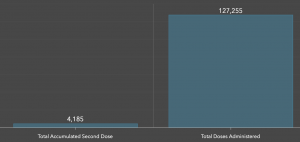
A current BCCDC graph showing the huge gap between 1st and 2nd doses. BC supplies have seriously dwindled because of manufacturing delays caused by vaccine factory expansions currently taking place in Europe.
Returning to the matter of discipline against the physicians who jumped the queue, many readers are likely intrigued by their possible excuses, explanations or even legal defences. Typically, doctors who get into medical-legal trouble immediately seek advice from the Canadian Medical Protective Association, their legal defence organization. I asked the CMPA if the Vancouver physicians had sought advice on this matter. Said Dr. Todd Watkins, Associate Executive Director of the CMPA:
“CMPA’s assistance to physician members is discretion-based. This means that we carefully review the facts and circumstances of each particular case and determine if the circumstances are within our scope of assistance and the nature of the assistance we can provide. Discretion gives us the flexibility to assist members rather than deny assistance based on a set of policies.
 We cannot comment on individual cases, but we will generally assist members with College matters relating to the professional practice of medicine, such as developing medical directives to support the COVID-19 vaccine rollout.”
Information about the CMPA’s assistance concerning the COVID-19 vaccination program states:
“The CMPA will not generally extend assistance with respect to administrative or logistical issues associated with the vaccination process, such as decisions about prioritization of individuals eligible to receive vaccines. Physicians involved in these issues should ensure that the organization that they are being asked to serve will provide them with full defence and full indemnification in the event of medical-legal difficulties that arise from this role.”
RELATED STORIES:
Physicians face disciplinary action for queue jumping
The post Investigations over into hospital doctors who jumped queues for 2nd COVID-19 shots appeared first on Medicine Matters.
]]>The post Physicians face disciplinary actions for breaching COVID-19 vaccination protocols appeared first on Medicine Matters.
]]>Vancouver Coastal Health is investigating reports of physicians who got their second COVID-19 vaccine doses before they were permitted to do so. Such physicians may be disciplined, according to an internal memo.
Health Minister Adrian Dix said today it’s disappointing to hear about these cases but he emphasized that they were picked up because of a provincial database that tracks every dose.
The internal memo stated:
“Through this system, it has come to our attention that there haven been instances in which physicians have attended our clinics and received their second dose of vaccine before they were invited or permitted to do so. These instances will be investigated and may result in disciplinary action.”
The government’s approach is to provide second doses of both the Pfizer and Moderna vaccines about 35 days after the first dose. B.C. decided to delay the second dose to 35 days, rather than the manufacturers’ recommendation of 21 to 28 days. By the end of March, B.C. expects that just over 240,000 people will have received two doses.
Dix said the government won’t comment further on physicians who skirted rules because “these are human resource issues and we won’t be commenting on them publicly.” He said while there have been media reports about “a few” individuals who’ve “gotten out of line” for immunizations, such cases shouldn’t detract from the success of the “work to date that overall has been excellent.”
Doctors of B.C., the group representing 14,000 physicians across the province, did not have a comment on the matter. Sharon Shore, a spokeswoman, said: “Given that we just found out about this situation a little while ago, we cannot comment without knowing more about what happened.” (The internal memo was obtained by MedicineMatters.ca yesterday).
About 63,000 doses have been delivered to high priority individuals like front line healthcare workers and residents of long term care thus far. The number of vaccinations has steadily declined in the past week because of shrinking supplies but the province is expecting more deliveries today and throughout the rest of the week.
Dr. Penny Ballem, chair of the VCH board, said she takes the matter involving the physicians who got earlier vaccinations seriously and “we hope it won’t be something we see a recurrence of.”
Vancouver Coastal Health was asked for comments yesterday, after I obtained the internal memo. The response sent today says:
“Vancouver Coastal Health (VCH) is committed to the roll-out of the COVID-19 immunization program in line with guidelines set out by the Ministry and the National Advisory Committee on Immunizations.
Administering the first doses of vaccine to as many vulnerable and high-risk people as possible in these early weeks will have the greatest impact on reducing severe illness, hospitalizations and death.
The overwhelming majority of healthcare professionals are following public health direction, and we are following-up on any individuals who have received a second dose of vaccine before they were invited to do so.
VCH is currently investigating and appropriate action will be taken to address any breaches of public health direction regarding vaccine administration.”
Meanwhile, at a teleconference press briefing, Dix announced that Ballem will be taking on an additional role as the provincial immunization leader for the “largest vaccination program in history.”
Dr. Ross Brown, who has been heading the pandemic response program since November, will continue to work on the vaccination program, under Ballem’s direction.
“I feel very happy and honoured to have this opportunity,” Ballem said. “It’s a mammoth task, but it can be done.”
Ballem, a former hematologist whose high-powered career has included jobs including deputy minister of health and Vancouver city manager, will lead the coordination efforts across the province. Provincial health officer Dr. Bonnie Henry said Ballem will direct the massive effort “whether it’s business or government or municipalities to help support us being able to equitably and rapidly provide this protection to as many of our community members as possible.”
The goal is to achieve herd immunity to COVID-19 by September.
While about 25,000 B.C. residents have been vaccinated weekly in the past month, Dix said the numbers should almost triple by next month when nearly 70,000 doses a week are delivered.
The B.C. vaccine plan is here.
The post Physicians face disciplinary actions for breaching COVID-19 vaccination protocols appeared first on Medicine Matters.
]]>The post Vaccinations in acute care hospitals fade as priority shifts to long term care sector appeared first on Medicine Matters.
]]>A Fraser Health physician leader, Dr. Dayan Muthayan, circulated an internal memo to doctors and other healthcare professionals recently, asking for their help as COVID-19 immunizers. The plea, right around New Year’s, produced instant results, a good thing since no other health region in B.C. has been as hard hit by COVID-19 as Fraser Health.
The region accounts for two-thirds of all the COVID-19 cases in B.C. since the pandemic began. Of late, the test positivity rate has been hovering around 10%.
Many hundreds of doctors, nurses, and pharmacists answered the call by Muthayan, the executive medical director of Fraser Health. But after only three days and 1,200 vaccinations, the clinic at Royal Columbian Hospital where the Pfizer-BioNTech vaccine was being distributed to frontline health care workers was shut down. One of the doctors – Dr. Kathleen Ross, the former president of Doctors of B.C. – vented her frustrations on Twitter:
I asked Ross the next day for more information and she said she was “politely asked not to engage (with) the media.” Another way to say muzzled.
Throughout the pandemic, doctors have taken to Twitter to share their knowledge, opinions and frustrations. And all too often they’ve been silenced. Some hospital staff like emergency room physicians have been threatened with firing if they speak out.
So it was good to get 15 minutes on the phone with Dr. Victoria Lee, CEO of Fraser Health today. She said she was happy to see how many hundreds of physicians and other health care professionals offered to do inoculations. “The response was tremendous. Everyone is stepping up and leaning in.”
She said that while healthcare staff in emergency departments, COVID-19 wards, and intensive care units at four hospitals – Abbotsford, Surrey, Burnaby and Royal Columbian – were the focus of vaccinations from the middle of December through the first week of New Year’s, the priority now is residents and staff in long term care and assisted living residences, especially because there isn’t an abundant supply of the vaccine.
Lee’s Twitter posts are decidedly more positive in tone than those from frustrated frontline health care workers:
A sizeable chunk of healthcare professionals have gotten COVID-19, especially care aides in long-term care facilities who’ve unwittingly transmitted infections to residents, resulting in outbreaks. Yesterday, the B.C. government finally offered more information on those outbreaks in care facilities, unveiling a new system to improve transparency. Two-thirds of the 988 deaths caused by COVID have been among elders in long term care.
Lee said like jurisdictions around the world, B.C. is at a “dire stage and whether we have vaccine or not, we need to maintain our vigilance.”
Dr. Bonnie Henry, the provincial health officer, revealed the priority groups for each stage of vaccinations, including 30,000 health-care workers by the end of February, providing vaccine supplies are constantly refreshed.
“We are constrained by logistics and also by how many vaccines we are receiving, but we’re optimistic, and we are focused intensely on making sure we protect people in long-term care and assisted living as quickly as we possibly can – and of course, protecting those most at risk in our communities,” she said.
B.C. had administered 46,259 COVID-vaccines to date, 65% of the 71,200 doses received so far.
Every province is struggling with vaccine supplies. In Ottawa today, Public Services and Procurement Minister Anita Anand said she’s been pressing vaccine manufacturers to expedite supplies and deliveries.
“I have spoken with the CEOs of both [vaccine] companies this week already, and I will continue to engage with them, as will my department, to move up doses from Q3 to Q2, from Q2 to Q1,” said, referring to the quarters of the calendar year.
Maj.-Gen. Dany Fortin, the military commander leading vaccine logistics for the Public Health Agency of Canada, said Canada is expected to receive four million doses of the Pfizer-BioNTech product and two million Moderna shots by the end of March — enough to vaccinate just three million people.
Here’s a detailed memo sent by the Fraser Health communications department, regarding that health region’s plans:
“We are currently in the first stage of the vaccine rollout across Fraser Health, with work well underway to vaccinate staff, medical staff, residents, and essential visitors in long term care and assisted living facilities, people awaiting long term care placement in acute and community settings, and priority acute care staff, medical staff and paramedics. We expect all eligible long term care and assisted living staff, medical staff and residents in the region to receive their first COVID-19 vaccination by mid-January.
Priority acute care health care workers include staff, medical staff and dedicated support services in emergency departments, critical care units, and COVID-19 units. We expect to immunize more than 6,000 of these priority staff and medical staff at acute care sites by January 23.
Dedicated immunization clinics in acute care began with our three regional COVID-19 hospitals – Surrey Memorial, Abbotsford Regional and Royal Columbian Hospitals. Burnaby Hospital also began immunization clinics this week, given the ongoing and significant outbreaks at that site. Remote First Nations communities will begin receiving vaccinations on January 13.
Over the next few weeks, we expect to immunize 12,000 to 15,000 individuals per week, and by February, we expect to be able to immunize up to 30,000 individuals per week.
We are grateful for the tremendous response from our staff and medical staff, as well as community physicians, local pharmacists, and other community partners who have stepped up to help administer the COVID-19 vaccine in our region. To date, nearly 550 medical staff, more than 75 pharmacists and 200 peer immunizers have expressed interest in administering the COVID-19 vaccine. In addition, Fraser Health has hired 60 dedicated immunizers and has redeployed additional staff to support our efforts.
Thanks to the efforts of our vaccine coordination centre and all those who have come forward to support immunizations, we have rapidly expanded our daily capacity from a few hundred to over 2,800 immunized per day as of yesterday.
Due to the numerous complexities of the vaccine rollout, our vaccine coordination centre teams are working around the clock to rapidly adjust and augment our schedules and strategies. We ask for the patience of those in our priority groups who are awaiting their vaccine as we endeavour to deliver an effective and efficient COVID-19 vaccine program.
Our vaccine coordinating and local Royal Columbian Hospital teams have done an incredible job with onsite vaccine clinics. As they had substantially completed their efforts to vaccinate priority acute care staff, medical staff and dedicated support services staff, a previously scheduled vaccine clinic at Royal Columbian Hospital was redirected to support our efforts to prioritize vaccination of our long term care and assisted living staff, medical staff and essential visitors.
Stage two of the vaccine rollout will begin before the end of January and will include broader groups of staff and medical staff who work in the health system.”
The post Vaccinations in acute care hospitals fade as priority shifts to long term care sector appeared first on Medicine Matters.
]]>The post Placing COVID patients face down can help lung function but it’s labour intensive appeared first on Medicine Matters.
]]>Not many people – outside those in health care – had heard of prone positioning before COVID-19.
Now it’s part of the pandemic parlance.
Prone positioning involves placing patients face down in their hospital beds to improve oxygenation in those struggling to breathe.
At Vancouver General Hospital and other designated hospitals for COVID patients, health professionals gingerly roll patients over onto their stomachs for up to 16 hours a day. But it requires a coordinated team effort of about five experienced health professionals including a nurse, physiotherapist, respiratory therapist, and physicians to get patients in such positions. All of them must be wearing full personal protective equipment.
Flipping patients over requires meticulous attention, ICU specialist Dr. Donald Griesdale told me.

Dr. Donald Griesdale, VGH anesthesiologist/ICU specialist
Hospital staff must ensure that endotracheal tubes, intravenous and catheter lines don’t get dislodged “because that could prove to be fatal.
“Fortunately, that is an exceedingly rare occurrence. We are so careful when we prone that I haven’t seen that happen,” he said, referring to critical tubes falling out during the act of proning a patient.
It’s a lot easier to do when patients are conscious; when heavily sedated, they can’t cooperate with the turning. If they are obese, it’s a whole lot harder for health professionals to flip patients.
Our lungs are complex workhorses, but at the same time, delicate. So when crude, infectious invaders like COVID-19 strike, our lungs can use a lot of extra help.
When we lay on our backs, in what’s known as the supine position, oxygen-carrying blood pools at the back of the thoracic cavity, largely because of the effects of gravity. The heart, which is almost completely surrounded by the lungs, may also put some compression pressure on the lungs when we lie on our backs, as can abdominal organs like the liver. When we lay face down, the heart rests against the sternum instead of on the lungs. The effects of gravity are relieved, easing lung function.
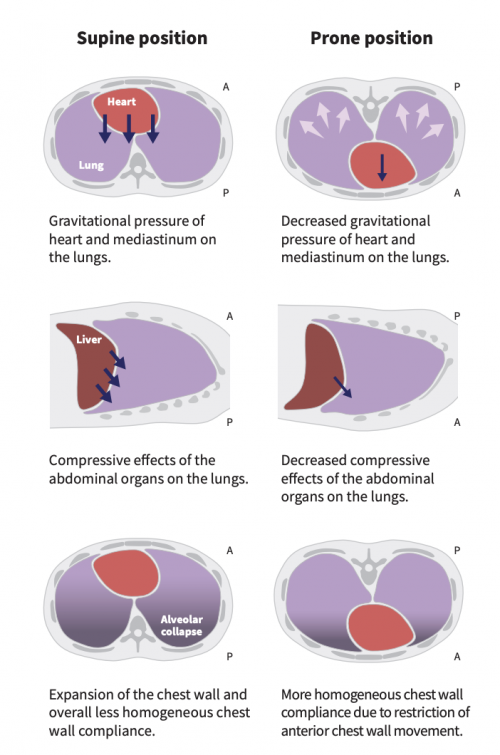
Comparison of the physiological effects of supine (face up) and prone (face down) positioning in hospitalized patients. Source: cmaj.ca Nov. 11, 2020
“Gravity is the inherent easy explanation but it also has to do with other factors,” Griesdale said, adding “it may even be more complicated than anyone understands.”
Prone positioning has been used in hospitalized pneumonia patients and those with acute respiratory distress syndrome for a few decades but it really came into vogue about seven years ago, after a study published in the New England Journal of Medicine showed a reduction in mortality among patients who were in prone positions for most of the day.
Research on its use during the COVID-19 pandemic is ongoing but Griesdale said his observations are that it’s helpful.
“Anecdotally, my impression is that proning can help with oxygenation in patients ventilated or breathing on their own.”
The downside of proning is that it’s not comfortable for some patients to remain face down for long periods so health professionals may have to turn them over periodically.
An early release article in the Canadian Medical Association Journal this week highlights the need for more studies to predict which patients with COVID-19 are most likely to benefit from prone positioning. Fortunately, the Toronto researchers are conducting research on that during the pandemic.
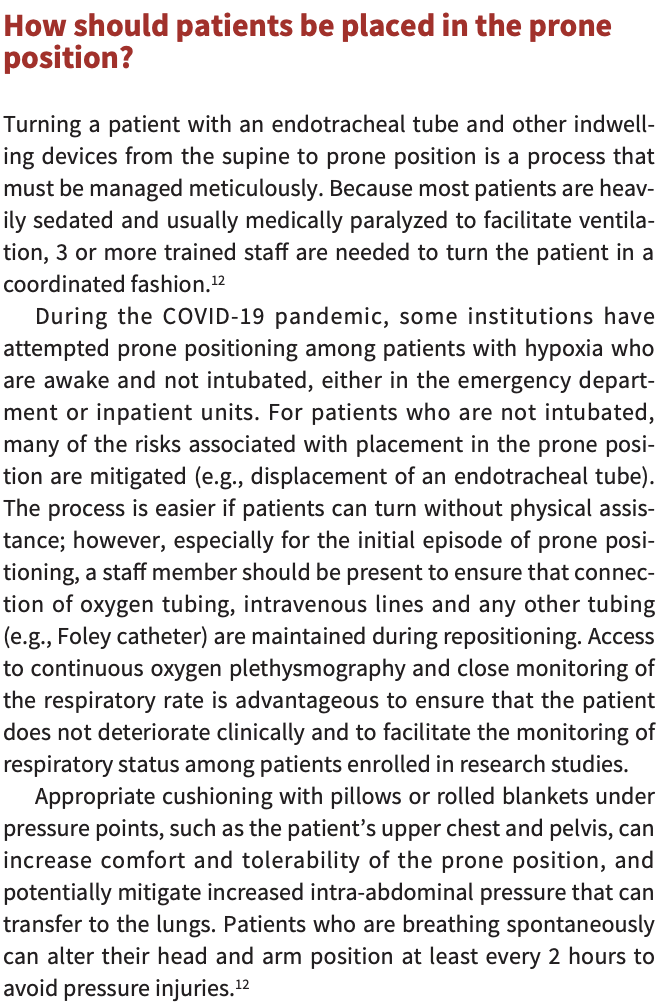
Their review of prone positioning offers insights into the difficulty of turning patients over when they have catheters, tubes, intravenous lines, and other medical devices attached to their bodies:
The post Placing COVID patients face down can help lung function but it’s labour intensive appeared first on Medicine Matters.
]]>The post Steep rise in COVID-19 infections among B.C. healthcare workers appeared first on Medicine Matters.
]]>BY PAMELA FAYERMAN
Cases of COVID-19 among B.C. healthcare workers have risen about 80% in the past three months.
Data provided by the B.C. government shows that as of Nov. 4, when there were a cumulative 16,135 lab-confirmed cases in B.C., the number of infections among healthcare workers was 1,442. Three months ago, the figure was 822.
The proportion of cases among healthcare workers represents at least 8.9% of the more than 16,000 lab-confirmed cases in the province since the pandemic began. (A few thousand individuals were either not asked or refused to answer questions about their occupation when they were tested).
The 8.9% proportion is lower than the early days of the pandemic when healthcare workers accounted for about 25% of all cases, but that could have been a misleading proportion since healthcare workers had unfettered access to testing while the general public did not.
Nevertheless, nurses are still the hardest hit – at least 325 have been infected since the pandemic began. That includes registered nurses and licensed practical nurses. Grouped together, the two nursing categories account for about 23% of cases while care aides, who generally work in long term care facilities, account for 18.2% of infections. In that category, there have been 262 infections, more than double the number three months ago.
Christine Sorensen, president of the B.C. Nurses Union, said the union “is very concerned that there’s been a significant jump in the number of nurses, and all health care workers, who have contracted COVID-19.
“As we navigate the second wave in B.C., we strongly believe that nurses must have unfettered access to personal protective equipment. The government continues to report large quantities of PPE has been procured over the last several months, so it is our expectation that it is made available to nurses, at worksites across the province, when they need it.”
Sorensen said the union continues to hear from nurses around the province who complain about shortages of PPE “and we expect the supply to meet the immediate demand.”
As the chart above shows, there have been 84 cases among dental professionals, a small increase since August when there were 77 cases.
Physicians account for 4.4% of cases. In the latest dataset, there are 64 cases compared to 41 three months ago. Cases amongst physicians accounted for just 5% of cases three months ago and now they represent 4.4%.
The government has been criticized for not providing better, more specific data. A category called “other” shows a whopping 382 cases, representing the single biggest proportion. But it is a grab bag of healthcare workers, including pharmacists. Healthcare workers can refuse to describe their positions when they are tested and that was the case with 95 individuals who refused to divulge their position when they got tested.
What is perhaps surprising is the low number of cases among housekeepers (45); lab technicians (20); and paramedics (16).
Dr. Bonnie Henry, B.C.’s provincial health officer, was on the defensive today when the government of B.C. was accused by the Public Health Agency of Canada of not sharing data on the occupational status of those who test positive.
There have been growing concerns by Henry and others in the provincial government that people will assume all the infections among healthcare workers were acquired in the workplace when in fact, it is often impossible to prove where infections were acquired.
The post Steep rise in COVID-19 infections among B.C. healthcare workers appeared first on Medicine Matters.
]]>The post Family doctors are as frazzled & frustrated as their patients through the COVID-19 pandemic appeared first on Medicine Matters.
]]>BY PAMELA FAYERMAN
Family medicine is in a state of crisis, exacerbated by the pandemic which, eight months in, has totally disrupted primary care physicians’ ability to provide face-to-face, quality care.
Things are so bad that while governments are urging everyone to get a flu shot to avoid a “twindemic” many doctors and their patients are confused about where to get vaccinated, just days away from the time when people typically start getting them.
At a visit to my own doctor’s office last month (for a shingles vaccination by the clinic nurse) I was told that I would have to make alternate arrangements if I wanted a flu shot. Then I heard rumblings about drive-through flu clinics, maybe even in the same parking lots where COVID-tests are offered by health regions. But I heard today from the ministry of health that drive-through vaccination centres are not being contemplated in B.C. even though they are happening in other parts of the country.
Instead, flu shot appointments, according to the B.C. government, can be made at “clinics, schools, large municipal spaces, and pharmacies where physical distancing and other public health measures can be maintained, and where individuals can be observed after their shot for the standard 15 minute monitoring period.”
The government spokeswoman also directed me to this information about where flu shots are available in Vancouver – www.vch.ca/flu.
Indeed, it would seem that flu shots this year will be largely offered outside the offices of family doctors. Check health region websites for more information.
Dr. Maryam Zeineddin, a family physician in West Vancouver where she shares office space with six other colleagues, said her office won’t be offering any flu vaccination clinics because of pandemic limitations.
“In my clinic, we provide care to over 10,000 patients but we have no physical ability to bring so many of the patients in, given all the restrictions, cleaning protocols and requirements for personal protective equipment (PPE).
“We want to see our community vaccinated but this would require help from the Vancouver Coastal Health Authority. We need a proper space to do it and some administrative or nursing support plus help obtaining and funding the PPE.”
Doctors in private practices are obligated to source and buy their own PPE. But they don’t have supply chains that can, at a snap of the fingers, deliver high volumes of masks, gloves, gowns, and face shields.
“It’s been seven months and we still can’t access Canadian suppliers. We got some help from Vancouver Coastal Health – two boxes of masks,” said Zeineddin, who often uses bike goggles when doing riskier procedures to protect her eyes from COVID and other contagions. She said the costs of ordering massive quantities of PPE are prohibitive for family doctors, many of whom are struggling to hold on to their leases and medical office assistants.
“We are seen as business owners, but it’s not a business where we can set or raise our fees to offset the extra costs since our fees are regulated. So when our overhead goes up exponentially, I can’t make up the difference.”
Overhead costs have risen up to 30% during the pandemic and it’s easy to see how. Face masks each cost between 50 cents and a dollar; N95 masks are at least $2.00 each; face shields are $3.00 apiece; disposable gowns $2.00 apiece and then there are gloves, cleaning supplies, and costs associated with cleaners (now $2,000 per month, up from $1,200) because deep cleans must be done daily in offices where patients are visiting. Many offices have installed plexiglass barriers as well.
Doctors of BC has negotiated a one-time grant up to $1,000 for doctors’ offices to help offset costs of PPE. Each eligible physician can apply for the grant. Zeineddin said every bit helps but that’s a drop in the bucket.
“Even if they gave us $1000 per month, these costs are prohibitive and you will see many more doctors’ offices closing,” she said.
“In our practice, we are doing 50-50- inpatient and virtual care. I see four patients per hour but can’t keep up because of so many complex concerns that have piled up over the course of the pandemic. Patients have not had proper care for seven months. They’ve been getting prescriptions over the phone.”
An organization that represents family doctors in B.C. has released a report describing the many problems in the primary care system – problems exacerbated by the pandemic. Zeineddin said the report makes it clear that doctors are running on fumes. As independent business owners, they don’t have the same resources given to hospitals and the urgent/primary care clinics that the NDP government has opened across B.C. where doctors are mostly salaried and. Indeed, many doctors are choosing to work in such clinics because they don’t have to worry about office overhead costs.
“Family doctors are (also) choosing paths such as hospital or emergency care where infrastructure is covered by the government-funded system,” said Dr. Jennifer Tranmer, president of BC Family Doctors’
The report concludes with these recommendations and pledges for advocacy:
Dr. Kathleen Ross, President, Doctors of BC
Dr. Kathleen Ross, president of Doctors of BC, which advocates for primary care physicians as well as specialists, said the report highlights “the critical role family doctors have played in the pandemic response to date as well as the pressures and challenges that remain for frontline primary care providers.
“Where we diverge slightly … is in highlighting the many key supports Doctors of BC has worked on for family doctors both before and after the pandemic began,” she said mentioning. supports for office expenses through business cost premiums on fee codes – based on where in the province doctors practice and their practice type, incentive fees for family practices that provide longitudinal care, and consulting with the government on Alternative Payment Contracts for community-based family doctors.”
Doctors of BC has also worked to get technical supports and fee changes so that medical offices could rapidly shift from 90% of office visits being in-person to 90% being virtual care.
The Divisions of Family Practice lobbied hard for COVID testing and assessment centres “to divert patients with respiratory symptoms away from community offices, both to limit exposures to other patients, office staff, and physicians and to preserve and centralize our limited supply of PPE.”
It has also consulted with health authorities to share their PPE supply chains with offices that have had trouble accessing their usual supply chains due to the global shortage of PPE. As Zeineddin said, however, her medical office has only been able to access two boxes of masks.
Ross said she knows there’s plenty more work to be done to support primary care and that “is proceeding more slowly than some may want. However, meaningful change in our primary care system can only occur if all partners continue to work collaboratively. Doctors of BC remains committed to working with all our healthcare partners to address the remaining issues highlighted by the report.”
The post Family doctors are as frazzled & frustrated as their patients through the COVID-19 pandemic appeared first on Medicine Matters.
]]>The post COVID-19 long-haulers: ailing and frustrated, they plead for more medical attention appeared first on Medicine Matters.
]]>Dr. Bonnie Henry is a saint to many for the way she’s led the COVID-19 public health crisis in B.C. On a national level, she is well known as chair of the Council of Chief Medical Officers of Health, a pan-Canadian public health network.
But for long-haulers – the catch-phrase used to describe an estimated 3,000 Canadians (about 200 in B.C.) whose COVID symptoms have persisted for many months – Henry and other public health leaders are a source of some frustration. That’s because they don’t feel medical health leaders are doing enough to validate what many COVID survivors – lab-confirmed or presumptive – are enduring.
No one (except advocacy groups) appears to be tracking how many Canadians have lingering COVID illness. Survivors are naturally fearful they will have permanent disabilities.
Some of the symptoms of this enigmatic chronic illness include fevers that last for months, impaired short-term memory, brain fog, changes to blood pressure and heart rate, muscle pain, nausea, crushing fatigue, and hair loss. A letter to Henry and her colleagues across the country documents the many reasons they feel like pandemic castaways. Many are those who got sick in February and March but couldn’t access tests because of overly restrictive criteria.
In late August, Henry responded to a letter from long haul advocate Chandra Pasma after she and about 60 co-signers sent Henry and her medical colleagues across Canada an impassioned plea for help.
They want to see more research conducted into their ongoing conditions, more medical support, and recognition that even if they didn’t have a positive test (often because they couldn’t access tests through the winter and early spring) they should nevertheless qualify for a presumptive diagnosis of COVID so they can at least get appointments with medical specialists like infectious disease experts, lung and heart specialists or neurologists.
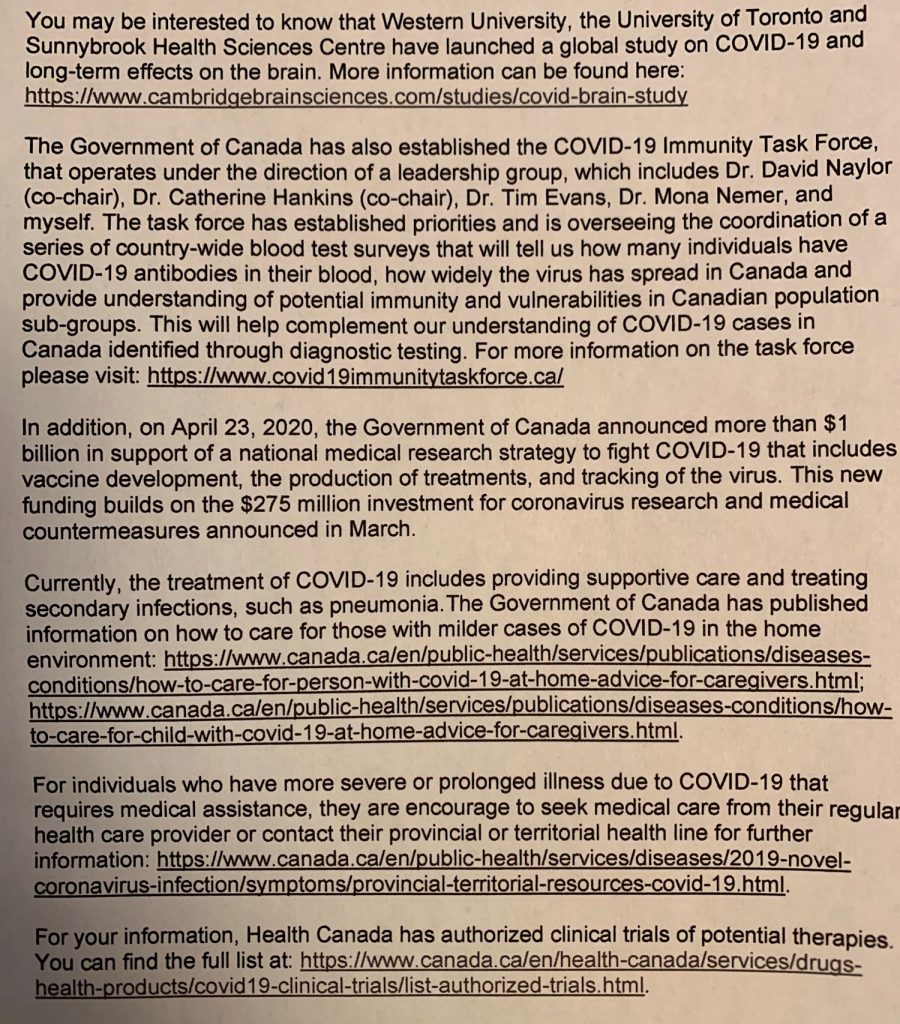
But Henry’s letter in response isn’t providing much relief to the long haulers who feel thery’re being brushed off. They don’t have confidence that Canada is conducting enough research on their conditions. Henry mentions three Ontario academic health institutions that are now collaborating on a major study focused on the long term effects of COVID-19 on the brain.
She acknowledges that “currently, the treatment of COVID-19 includes providing supportive care and treating secondary infections such as pneumonia, while for individuals with more prolonged illness, they should see their regular health providers.” (An excerpt of her letter is at the bottom of this article.)
Because of the insidious long-term effects of COVID-19, an increasing number of people have turned to social media for peer support. One of those is the Body Politic Covid Support Group. Another important resource is Survivor Corps, also a grassroots group providing education and other resources. Many of the members of such groups use only their first names because they are worried about workplace issues, disclosing personal health information in forums, and stigmas.
Jaye Lemmon, a Sunshine Coast resident who became ill in late March, said as a group, long haulers feel “denigrated, denied, and discounted.
“My hope is that the more people hear about long term recovery, the more they may take prevention more seriously and we get more help from the medical system. After all, we are the long term COVID pioneers. People will be helped through such information and research about us.”
Lemmon said she was a busy registered massage therapist before she got ill. Now she is unable to work because of symptoms like disabling fatigue and tinnitus.
“If the virus doesn’t kill you, it can keep you unwell for a long time.”
Estella K. said she’s relieved that long haulers are finally getting attention because “the general public still does not understand the seemingly random long term effects of COVID.”
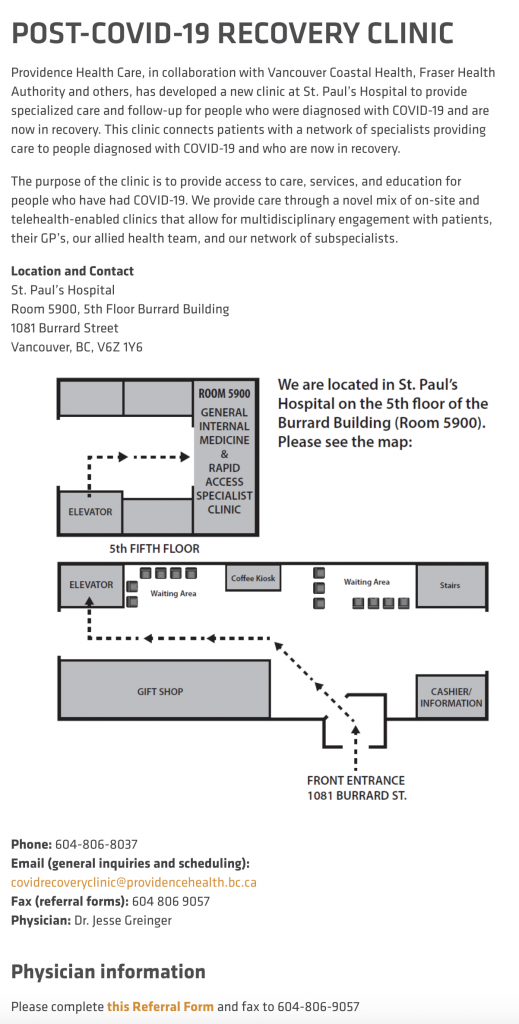
Although she was not able to get tested in early March, the college instructor said her doctor has listed her as presumptive for COVID. Yet she has not been able to get a referral to the St. Paul’s Hospital COVID recovery clinic. “Some days I am so ill I can’t leave my apartment and one night I thought I would die because I couldn’t breathe.”
Prior to the pandemic, the 48-year old was in excellent health, hiking regularly on challenging trails, running and cycling. Now she on sick leave and on some days, too ill to leave her apartment.
Another long haul patient, a Vancouver engineer, told me that his medical symptoms have baffled his family doctor with whom he has had telehealth calls with twice a week. He turned to other long haulers online.
“I surprisingly warmed up to the idea of shared compassion for the others going through this rollercoaster of a medical nightmare and found it helpful to have others to relate to, someone else to understand, to ask if you’re feeling better because this relentless condition lets up only to relapse and is a painful question that we all get from our family, friends, and colleagues, all too often.”
The individual, who finally has an appointment this week at the recently opened St. Paul’s Hospital clinic, said he presumes he got COVID on a holiday to California in early March. But many months since, he has been frustrated that public health officials seem to be mostly paying lip service to the huge numbers of COVID survivors with ongoing symptoms.
“It shouldn’t be this hard. There will be many more victims like us and it shouldn’t take such a determined and resourceful group of people many months to find help. Front line clinicians are dismissing our experiences and public health statements are contradicting our lived experiences.”
Another long-hauler – a 29-year old lawyer from North Vancouver – told me she was in excellent health prior to getting sick in late March, after a spin class. She presumed her illness was COVID even though she couldn’t get tested. She went to an emergency department on April 2 because of chest pain and breathing problems. She had a CT scan and a physician told her that she had a virus in her lungs but she was still ineligible for a COVID test. She finally got a test three weeks later; it was negative but likely because it was conducted too late.
In late June, she had a resurgence of symptoms – chest pain, shortness of breath, and a heart rhythm issue. She had another CT scan, an ultrasound, and another COVID test (again negative). She’s waiting for an appointment with a lung specialist but she’s been warned it will take nine months to get in.
“I also received a referral to the COVID rehab clinic at St. Paul’s, however, I then was told that they only accept patients who have tested positive for COVID. Vancouver General Hospital only accepts patients who were hospitalized.”
I asked St. Paul’s Hospital officials for data about patient visits, clinic access, and waiting times. This is the response I got today from communications spokeswoman Elaine Yong:
“A group of clinicians, researchers, and patients are actively engaged in enabling the development of post COVID care around the province.
The post-COVID clinic at St. Paul’s Hospital is supported by a committed group of clinicians, researchers, and patients who are actively engaged in developing the best ways to look after these patients and to understand and learn about this new disease together. They are working in collaboration with VCH and Fraser Health.
The clinic is in its very early stages so we do not have data available on numbers yet. Currently, people need a referral to the clinic through their family physician, but we are working on other ways for people to access. People who need care through the clinic are receiving it.
“Another important provincial resource available for family physicians and specialists anywhere in the province is the RACE (Rapid Access to Consultative Expertise) phone line. There is now expertise in post-COVID-19 care available Monday to Friday, 8 am to 5 pm. Experts from PHC, VCH, and Fraser Health are available to answer questions. We all learn more about COVID-19 almost every day…the clinic will adapt. So what is happening there today may look very different in a month, next week, next year.”
Another COVID-19 long-hauler I spoke with is a 46-year old health care provider at a Vancouver suburban hospital who asked not to be named because she doesn’t want to strike panic among past and future patients.
Although she had a sore throat in early February, she was not COVID tested until late March when a persistent cough began. She’s been off work since June when she developed severe headaches, dizziness, short term memory loss, an unsteady gait, hand tremor, light sensitivity, hearing and vision problems – ” a whole slew of things that resulted in a referral to a neurologist who basically attributes all the symptoms to anxiety.
“The so-called treatment has been appalling and insulting,” she said. She’s had no imaging tests because the neurologist wouldn’t order them. A visit with an infectious disease specialist was more productive.
“He is certain these symptoms stem from COVID and he thinks they could last a year or two.”
Apart from the symptoms that on many days prevent her from getting out of bed, she says the most difficult challenge is “not being believed, not being acknowledged.
“We seem to be without any sort of rehab centres for post-COVID and are totally lacking any sort of official BCCDC admission that “long COVID is even a thing, let alone tracking it.”
Another long hauler vented frustration about medical care seemingly unavailable for long haulers:
“I’m trying to receive the help I need but I seem to have hit dead end after dead end because I was ineligible for testing when I had COVID.” She is referring to the fact that B.C. was mostly restricting tests to health care and other essential service workers in the early stages of the pandemic.
Here’s an excerpt from the letter Dr. Henry sent to a large group of COVID-19 (or presumed COVID) survivors:
Feel free to leave comments and/or send emails to: [email protected]
RELATED STORIES:
Private COVID-19 antibody testing
How public health defines recovered COVID cases
The post COVID-19 long-haulers: ailing and frustrated, they plead for more medical attention appeared first on Medicine Matters.
]]>The post More than 800 COVID-19 infections in B.C. healthcare workers; the full breakdown is here. appeared first on Medicine Matters.
]]>The B.C. government and BCCDC have finally responded to my request for a breakdown on the number of COVID-19 infections in healthcare workers.
As of August 8, the latest date for which data is available, 178 registered and licensed practical nurses in B.C. have tested positive since the pandemic began. Given historical trends (20 additional cases in each of the past few months among nurses), the number would, as of today, be closer to 200. The August 8 data shows an increase of 42 cases from two months ago when the number of nurses infected was 136.
Registered nurses account for 17.5% of COVID-19 cases in healthcare workers while licensed practical nurses account for 4.1%. The data does not distinguish between health professionals who were infected at work or outside health care facilities. It is often impossible to determine the source of infections but nurses have recently been granted
As of August 8, healthcare workers accounted for 17% of the 4,825 COVID cases on that date. As of August 24, there were 5,184 lab-tested or epi-linked cases in the general population, including 23 deaths.
As the chart above shows, the next most impacted category of healthcare workers is care aides – 129 infected compared to 95 two months ago. Nearly 300 individuals who work in long term care, in various capacities, have gotten COVID-19, according to the government. There have been 77 dental professionals affected by the virus, an increase of 10 cases from two months ago.
Forty-one physicians have tested positive, an increase from 35 cases two months ago.
Some of the data is rather non-specific; 205 cases representing 25% of all COVID cases in healthcare workers fall under a category called “other” which includes pharmacists. Another 80 are “not specified” because the healthcare worker did not provide that information at the time of testing. Without specifics, it’s impossible to know how many allied health professionals have potentially contracted COVID-19 at work – including pharmacists, massage therapists, physical therapists, chiropractors, and traditional Chinese medicine, for example.
The healthcare worker definition for these purposes includes all those who either provide care or who work in healthcare facilities so that can include students, volunteers, and those who work as support staff, in clerical roles, for example.
Housekeepers, paramedics, hospital/health facility kitchen staff, and laboratory technicians account for relatively low numbers of cases, a fact that should be somewhat reassuring to such healthcare workers and their employers.
BCCDC says only one health care worker has died since the pandemic began and it has been determined that exposure to the fatal COVID-19 infection occurred “outside the clinical work setting.”
RELATED ARTICLES:
Pandemic and Health Journalism
25% of COVID Cases Among Healthcare Workers
The Giving Tree for a Nurse with COVID
What is a Resolved COVID-19 Case?
The post More than 800 COVID-19 infections in B.C. healthcare workers; the full breakdown is here. appeared first on Medicine Matters.
]]>