The post As vaccinations resume, health pros cautioned about selfies on social media appeared first on Medicine Matters.
]]>COVID-19 vaccinations are expected to resume again in the next few weeks after a lull due to vaccine scarcity from suppliers. Selfie photos posted on social media of individuals getting vaccinated can trigger negative emotions on the part of those waiting for vaccinations. A commentary on this is by Ben Huang, an emergency medicine resident at the University of B.C. who is also a Global Journalism Fellow at the Dalla Lana School of Public Health at the University of Toronto.
BY BEN HUANG
As doctors across Canada receive COVID-19 vaccines, many are sharing photographs on social media to inspire hope and to encourage others to get vaccinated too.
This has sparked controversy around “vaccine selfies,” as other doctors say the pictures provoke anxiety, anger and envy.
The debate among doctors over how to use social media is merely the tip of the iceberg, with inequalities in Canada’s slow and irregular vaccine rollout at the root of the frustrations.
Studies over the past decade have demonstrated links between browsing social media and depressive symptoms, especially when online content triggers envy. And during the COVID-19 pandemic, vaccine envy is inevitable, with vaccines being limited and the pandemic continuing to rapidly grow.
By all means celebrate, but celebrate privately….We get it—we’re happy for you. Just don’t rub salt in our wounds.
Social media triggers
For some health-care workers, social media selfies are an unwelcome trigger.
“Social media is complicated,” says Dr. Amelia Yip, a cardiologist in Waterloo, Ont., who recently received her first dose vaccine. “Even within the healthcare profession, there are people who should be getting it before others. But the way it’s being rolled out doesn’t always work that way.”
“The way the distribution is happening, it feels like there isn’t a coordinated effort. It feels under-appreciative for healthcare workers, or even those at risk, not just doctors,” says Dr. Yip.
Canada’s vaccine rollout has been highly variable between provinces. In Ontario, for example, almost 19% of vaccinated people have completed both doses, compared to only 1.5% in British Columbia.
And in Québec, where second doses are being postponed significantly until mid-March, no one has yet received two doses.
Dr. Yip says there are pockets of people who have been missed in her local rollout, and that at her hospital, cardiologists had to remind authorities that they, too, are involved in critical care.
Meanwhile, says Dr. Yip, it’s been doubly frustrating to see vaccine selfies posted by people who don’t work on the frontlines.
“Yesterday, a completely non-medical person who’s an accountant and happens to work at a Toronto hospital got it. When you see someone not even working [with COVID-19 patients] getting it, it feels like the person is jumping the queue.”
Anger and resignation
The vaccine rollout in B.C. has featured similar criticisms and controversies around queue-jumping by doctors and administrators.
Dr. Alan Drummond, an emergency physician in Perth, Ont., where frontline workers are still waiting for word of vaccines, says: “You have to take the broader context to understand where some of the disappointment and anger is coming from. For at least 10 months, ER physicians and nurses were dealing with a novel virus that has the potential to be quite deadly. I don’t know anybody in my sphere who shied away from the responsibilities of looking after patients—nobody.”
Dr. Drummond says the initial arrival of vaccines in Canada was met with hope and enthusiasm, and that it was “entirely appropriate” that doctors celebrated on social media as a sign of the beginning of change.
But as selfies continue to get posted online, Dr. Drummond says he and his colleagues are beginning to feel resigned and angry.
“The inequities are starting to show…. We need an appropriate queue—we certainly aren’t in it. And [the selfies are] the icing on the cake.”
Impacts of stress
Stress due to providing care to coronavirus patients has significant consequences. Frontline doctors, nurses and therapists are burned out. Tragically, 35-year-old Dr. Karine Dion recently died by suicide. Emergency and intensive care doctors have also reported feeling overwhelmed.
Dr. Sarah Giles, a rural family and emergency doctor in Kenora, Ont., says her community will not be receiving vaccines until April.
“When we look at inequalities, we know that there is a lifespan discrepancy between living in northwest Ontario and in southern Ontario. As my friend said, we’re at the end of the supply for fruits and vegetables and you can tell: We’re at the end for vaccines as well.”
And especially in rural communities, says Dr. Giles, every healthcare worker is paramount.
“We have human resources issues. If we lose a couple of doctors or nurses, it’s going to be a big problem.”
For Dr. Giles, who lives alone, vaccine selfies have been personally anxiety-provoking; she says when she gets vaccinated, she will not post a selfie.
As for Dr. Drummond, he has this message for doctors: “By all means celebrate, but celebrate privately. Just don’t do it so publicly when a lot of your colleagues who are dealing with their own anxieties and fears. We get it—we’re happy for you. Just don’t rub salt in our wounds.”
This article is republished from The Conversation under a Creative Commons license. Read the original article.
RELATED ARTICLES:
Physicians face disciplinary action for queue jumping
Investigations over into hospital doctors who jumped queues for 2nd COVID-19 shots
The post As vaccinations resume, health pros cautioned about selfies on social media appeared first on Medicine Matters.
]]>The post Investigations over into hospital doctors who jumped queues for 2nd COVID-19 shots appeared first on Medicine Matters.
]]>Vancouver health authorities have completed their investigations into hospital-based physicians who jumped COVID-19 vaccination queues by not waiting for their second dose “invitations.”
“While we are unable to disclose the details of specific personnel cases, we can confirm that the medical staff who have had received their second dose before they were invited to do so was limited and each case has been formally investigated and appropriate action has been or will be taken,” said Vancouver Coastal Health spokeswoman Rachel Galligan.
I first reported on the controversy here after obtaining the internal memo circulated to the medical staff at hospitals like Vancouver General and St. Paul’s. The identity of the physicians is a closely guarded secret, but since the only doctors who’ve been able to access COVID vaccinations thus far are those providing care to COVID patients, they are likely critical care specialists, emergency department physicians or other specialists working on COVID units.
“The vast majority of our health-care workers and medical staff are adhering to public health guidance and are patiently awaiting their turn for vaccination,” Galligan continued. “VCH and Providence Health Care are committed to fully investigating and addressing any substantiated breaches of Public Health direction regarding vaccine sequencing and administration.”
Meanwhile, the vanishing and indeed near-extinct supply of COVID-19 vaccine means that many first priority physicians, nurses and other healthcare workers – those providing direct patient care to COVID-19 patients – will likely miss recommended timelines for their second shots. The two vaccines approved in Canada so far — PfizerBioNTech and Moderna’s — both require two separate doses in order to achieve 94-95% protection for the patient. Pfizer’s second dose is intended to be delivered 21 days after the first, while Moderna recommends 28 days after the first. But the World Health Organization and the National Advisory Committee on Immunization (NACI) have each given support for up to 42 days between doses because of extraordinary supply issues.
Provincial health officer Dr. Bonnie Henry was among the first doctors to get vaccinated last month when the first shipments arrived. It’s now been 38 days since Dr. Henry’s first dose, so I dared to ask the ministry of health whether she has had her second shot or when she intends to get it. Her office staff declined to divulge anything yesterday. Today, at the end of an hour-long press briefing, Henry said she has not received her second dose:
“I absolutely believe in the data that we have that shows extending the interval between dose one and dose two is not only safe but there’s a real probability it will provide more durable and longer-lasting protection. So I will be waiting until there’s sufficient vaccine available later on in the Spring.” The first day of Spring is March 20.
Undoubtedly, vaccinations are a sensitive and politically charged matter purely because of vaccine supply issues. Henry had a photographer take photos of her getting her first dose at an Island Health clinic in Victoria late last year. Although she doesn’t treat patients and wouldn’t be considered a frontline healthcare worker, it made sense for her to make this public display in order to show her confidence in the safety and effectiveness of the brand new vaccine. Indeed, the confidence in vaccines demonstrated by experts like Dr. Henry – coupled with public desperation – are factors contributing to public opinion polls that show vaccine hesitancy is rare in Canada.
But now that the fridges are essentially empty for second doses, it makes little sense, from a public relations standpoint, for Henry to be seen rolling up her sleeve for her second dose. Indeed, doing so might provoke or irritate front line healthcare workers who may not get second doses until March, given supply interruptions.
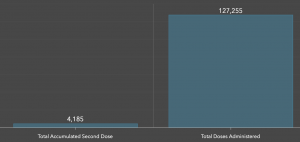
A current BCCDC graph showing the huge gap between 1st and 2nd doses. BC supplies have seriously dwindled because of manufacturing delays caused by vaccine factory expansions currently taking place in Europe.
Returning to the matter of discipline against the physicians who jumped the queue, many readers are likely intrigued by their possible excuses, explanations or even legal defences. Typically, doctors who get into medical-legal trouble immediately seek advice from the Canadian Medical Protective Association, their legal defence organization. I asked the CMPA if the Vancouver physicians had sought advice on this matter. Said Dr. Todd Watkins, Associate Executive Director of the CMPA:
“CMPA’s assistance to physician members is discretion-based. This means that we carefully review the facts and circumstances of each particular case and determine if the circumstances are within our scope of assistance and the nature of the assistance we can provide. Discretion gives us the flexibility to assist members rather than deny assistance based on a set of policies.
 We cannot comment on individual cases, but we will generally assist members with College matters relating to the professional practice of medicine, such as developing medical directives to support the COVID-19 vaccine rollout.”
Information about the CMPA’s assistance concerning the COVID-19 vaccination program states:
“The CMPA will not generally extend assistance with respect to administrative or logistical issues associated with the vaccination process, such as decisions about prioritization of individuals eligible to receive vaccines. Physicians involved in these issues should ensure that the organization that they are being asked to serve will provide them with full defence and full indemnification in the event of medical-legal difficulties that arise from this role.”
RELATED STORIES:
Physicians face disciplinary action for queue jumping
The post Investigations over into hospital doctors who jumped queues for 2nd COVID-19 shots appeared first on Medicine Matters.
]]>The post Physicians face disciplinary actions for breaching COVID-19 vaccination protocols appeared first on Medicine Matters.
]]>Vancouver Coastal Health is investigating reports of physicians who got their second COVID-19 vaccine doses before they were permitted to do so. Such physicians may be disciplined, according to an internal memo.
Health Minister Adrian Dix said today it’s disappointing to hear about these cases but he emphasized that they were picked up because of a provincial database that tracks every dose.
The internal memo stated:
“Through this system, it has come to our attention that there haven been instances in which physicians have attended our clinics and received their second dose of vaccine before they were invited or permitted to do so. These instances will be investigated and may result in disciplinary action.”
The government’s approach is to provide second doses of both the Pfizer and Moderna vaccines about 35 days after the first dose. B.C. decided to delay the second dose to 35 days, rather than the manufacturers’ recommendation of 21 to 28 days. By the end of March, B.C. expects that just over 240,000 people will have received two doses.
Dix said the government won’t comment further on physicians who skirted rules because “these are human resource issues and we won’t be commenting on them publicly.” He said while there have been media reports about “a few” individuals who’ve “gotten out of line” for immunizations, such cases shouldn’t detract from the success of the “work to date that overall has been excellent.”
Doctors of B.C., the group representing 14,000 physicians across the province, did not have a comment on the matter. Sharon Shore, a spokeswoman, said: “Given that we just found out about this situation a little while ago, we cannot comment without knowing more about what happened.” (The internal memo was obtained by MedicineMatters.ca yesterday).
About 63,000 doses have been delivered to high priority individuals like front line healthcare workers and residents of long term care thus far. The number of vaccinations has steadily declined in the past week because of shrinking supplies but the province is expecting more deliveries today and throughout the rest of the week.
Dr. Penny Ballem, chair of the VCH board, said she takes the matter involving the physicians who got earlier vaccinations seriously and “we hope it won’t be something we see a recurrence of.”
Vancouver Coastal Health was asked for comments yesterday, after I obtained the internal memo. The response sent today says:
“Vancouver Coastal Health (VCH) is committed to the roll-out of the COVID-19 immunization program in line with guidelines set out by the Ministry and the National Advisory Committee on Immunizations.
Administering the first doses of vaccine to as many vulnerable and high-risk people as possible in these early weeks will have the greatest impact on reducing severe illness, hospitalizations and death.
The overwhelming majority of healthcare professionals are following public health direction, and we are following-up on any individuals who have received a second dose of vaccine before they were invited to do so.
VCH is currently investigating and appropriate action will be taken to address any breaches of public health direction regarding vaccine administration.”
Meanwhile, at a teleconference press briefing, Dix announced that Ballem will be taking on an additional role as the provincial immunization leader for the “largest vaccination program in history.”
Dr. Ross Brown, who has been heading the pandemic response program since November, will continue to work on the vaccination program, under Ballem’s direction.
“I feel very happy and honoured to have this opportunity,” Ballem said. “It’s a mammoth task, but it can be done.”
Ballem, a former hematologist whose high-powered career has included jobs including deputy minister of health and Vancouver city manager, will lead the coordination efforts across the province. Provincial health officer Dr. Bonnie Henry said Ballem will direct the massive effort “whether it’s business or government or municipalities to help support us being able to equitably and rapidly provide this protection to as many of our community members as possible.”
The goal is to achieve herd immunity to COVID-19 by September.
While about 25,000 B.C. residents have been vaccinated weekly in the past month, Dix said the numbers should almost triple by next month when nearly 70,000 doses a week are delivered.
The B.C. vaccine plan is here.
The post Physicians face disciplinary actions for breaching COVID-19 vaccination protocols appeared first on Medicine Matters.
]]>The post Vaccinations in acute care hospitals fade as priority shifts to long term care sector appeared first on Medicine Matters.
]]>A Fraser Health physician leader, Dr. Dayan Muthayan, circulated an internal memo to doctors and other healthcare professionals recently, asking for their help as COVID-19 immunizers. The plea, right around New Year’s, produced instant results, a good thing since no other health region in B.C. has been as hard hit by COVID-19 as Fraser Health.
The region accounts for two-thirds of all the COVID-19 cases in B.C. since the pandemic began. Of late, the test positivity rate has been hovering around 10%.
Many hundreds of doctors, nurses, and pharmacists answered the call by Muthayan, the executive medical director of Fraser Health. But after only three days and 1,200 vaccinations, the clinic at Royal Columbian Hospital where the Pfizer-BioNTech vaccine was being distributed to frontline health care workers was shut down. One of the doctors – Dr. Kathleen Ross, the former president of Doctors of B.C. – vented her frustrations on Twitter:
I asked Ross the next day for more information and she said she was “politely asked not to engage (with) the media.” Another way to say muzzled.
Throughout the pandemic, doctors have taken to Twitter to share their knowledge, opinions and frustrations. And all too often they’ve been silenced. Some hospital staff like emergency room physicians have been threatened with firing if they speak out.
So it was good to get 15 minutes on the phone with Dr. Victoria Lee, CEO of Fraser Health today. She said she was happy to see how many hundreds of physicians and other health care professionals offered to do inoculations. “The response was tremendous. Everyone is stepping up and leaning in.”
She said that while healthcare staff in emergency departments, COVID-19 wards, and intensive care units at four hospitals – Abbotsford, Surrey, Burnaby and Royal Columbian – were the focus of vaccinations from the middle of December through the first week of New Year’s, the priority now is residents and staff in long term care and assisted living residences, especially because there isn’t an abundant supply of the vaccine.
Lee’s Twitter posts are decidedly more positive in tone than those from frustrated frontline health care workers:
A sizeable chunk of healthcare professionals have gotten COVID-19, especially care aides in long-term care facilities who’ve unwittingly transmitted infections to residents, resulting in outbreaks. Yesterday, the B.C. government finally offered more information on those outbreaks in care facilities, unveiling a new system to improve transparency. Two-thirds of the 988 deaths caused by COVID have been among elders in long term care.
Lee said like jurisdictions around the world, B.C. is at a “dire stage and whether we have vaccine or not, we need to maintain our vigilance.”
Dr. Bonnie Henry, the provincial health officer, revealed the priority groups for each stage of vaccinations, including 30,000 health-care workers by the end of February, providing vaccine supplies are constantly refreshed.
“We are constrained by logistics and also by how many vaccines we are receiving, but we’re optimistic, and we are focused intensely on making sure we protect people in long-term care and assisted living as quickly as we possibly can – and of course, protecting those most at risk in our communities,” she said.
B.C. had administered 46,259 COVID-vaccines to date, 65% of the 71,200 doses received so far.
Every province is struggling with vaccine supplies. In Ottawa today, Public Services and Procurement Minister Anita Anand said she’s been pressing vaccine manufacturers to expedite supplies and deliveries.
“I have spoken with the CEOs of both [vaccine] companies this week already, and I will continue to engage with them, as will my department, to move up doses from Q3 to Q2, from Q2 to Q1,” said, referring to the quarters of the calendar year.
Maj.-Gen. Dany Fortin, the military commander leading vaccine logistics for the Public Health Agency of Canada, said Canada is expected to receive four million doses of the Pfizer-BioNTech product and two million Moderna shots by the end of March — enough to vaccinate just three million people.
Here’s a detailed memo sent by the Fraser Health communications department, regarding that health region’s plans:
“We are currently in the first stage of the vaccine rollout across Fraser Health, with work well underway to vaccinate staff, medical staff, residents, and essential visitors in long term care and assisted living facilities, people awaiting long term care placement in acute and community settings, and priority acute care staff, medical staff and paramedics. We expect all eligible long term care and assisted living staff, medical staff and residents in the region to receive their first COVID-19 vaccination by mid-January.
Priority acute care health care workers include staff, medical staff and dedicated support services in emergency departments, critical care units, and COVID-19 units. We expect to immunize more than 6,000 of these priority staff and medical staff at acute care sites by January 23.
Dedicated immunization clinics in acute care began with our three regional COVID-19 hospitals – Surrey Memorial, Abbotsford Regional and Royal Columbian Hospitals. Burnaby Hospital also began immunization clinics this week, given the ongoing and significant outbreaks at that site. Remote First Nations communities will begin receiving vaccinations on January 13.
Over the next few weeks, we expect to immunize 12,000 to 15,000 individuals per week, and by February, we expect to be able to immunize up to 30,000 individuals per week.
We are grateful for the tremendous response from our staff and medical staff, as well as community physicians, local pharmacists, and other community partners who have stepped up to help administer the COVID-19 vaccine in our region. To date, nearly 550 medical staff, more than 75 pharmacists and 200 peer immunizers have expressed interest in administering the COVID-19 vaccine. In addition, Fraser Health has hired 60 dedicated immunizers and has redeployed additional staff to support our efforts.
Thanks to the efforts of our vaccine coordination centre and all those who have come forward to support immunizations, we have rapidly expanded our daily capacity from a few hundred to over 2,800 immunized per day as of yesterday.
Due to the numerous complexities of the vaccine rollout, our vaccine coordination centre teams are working around the clock to rapidly adjust and augment our schedules and strategies. We ask for the patience of those in our priority groups who are awaiting their vaccine as we endeavour to deliver an effective and efficient COVID-19 vaccine program.
Our vaccine coordinating and local Royal Columbian Hospital teams have done an incredible job with onsite vaccine clinics. As they had substantially completed their efforts to vaccinate priority acute care staff, medical staff and dedicated support services staff, a previously scheduled vaccine clinic at Royal Columbian Hospital was redirected to support our efforts to prioritize vaccination of our long term care and assisted living staff, medical staff and essential visitors.
Stage two of the vaccine rollout will begin before the end of January and will include broader groups of staff and medical staff who work in the health system.”
The post Vaccinations in acute care hospitals fade as priority shifts to long term care sector appeared first on Medicine Matters.
]]>The post The moment when frozen COVID-19 vaccines were unpacked – photos & videos document historic event appeared first on Medicine Matters.
]]>The B.C. government has released photos and videos of the pivotal moments when UPS staff gingerly transferred boxes of the first shipment of Pfizer-BioNTech off a plane and into a transport freezer. And hospital staff receiving the closely guarded shipment of about 4,000 doses of the vaccine.
The images and video are chilling, and not just because of the dry ice surrounding the vaccines packed in cartons resembling pizza boxes. The vaccine is guarded by security staff and handled with extreme caution by those unpacking it.
The identity of the individuals is not disclosed but whoever they are, they will never forget these momentous events in their healthcare careers.
Two unnamed hospitals – in Vancouver and likely Surrey – will be the locale today for the first COVID-19 vaccinations, fittingly going to health-care workers who staff long-term care homes, and nurses, physicians and others who work in intensive care units, COVID-19 units and emergency departments.
Fraser Health and Vancouver Coastal Health are now scheduling the initial vaccine appointments. Starting next week, vaccines will be delivered weekly to all health authorities.
To watch videos, go here:
https://spaces.hightail.com/receive/TQCEdboiZH
https://spaces.hightail.com/receive/ik4phtSVDq
The post The moment when frozen COVID-19 vaccines were unpacked – photos & videos document historic event appeared first on Medicine Matters.
]]>The post COVID-19 immunizers: sharpen your skills to avoid patients’ shoulder pain appeared first on Medicine Matters.
]]>Right after my shingles shot a few months ago, I had deltoid area redness, pain, and inflammation for four days. Symptoms were generalized to the entire shoulder area making it difficult to even use my arm.
My primary care doctor had warned me beforehand about this being a Shingrix effect. But after reading an article in a healthcare publication, it seems possible that perhaps some of these side effects could have to do with techniques used by injectors.
And as nations around the world start vaccinating citizens against COVID-19, the instructions from pharmaceutical expert Lu-Ann Murdoch (which I’m posting below) should be read and heeded by all those who will be doing the injecting, to potentially minimize the risks of shoulder injuries after COVID-19 shots.
The vaccines will be delivered into the same deltoid area as many others. According to Pfizer study results published in the New England Journal of Medicine, a good proportion of those who get vaccinated can expect some soreness for a few days.
Appropriate injection techniques are imperative. Canadian health providers who will be doing vaccinations, starting today, have received instruction. With permission from Canadian HealthcareNetwork.ca, here’s some more information about deltoid injections from Murdoch.
For citations, health professionals can consult the original article.
By Lu-Ann Murdoch
Shoulder injury is an infrequent occurrence after vaccine administration, but all immunizers must be aware of and be able to recognize this adverse event and refer patients for appropriate treatment when needed.
It’s also important for immunizers to periodically review proper intramuscular injection technique to minimize the occurrence of a post-vaccination shoulder injury.
Many vaccines typically cause transient (24- to 48-hour) soreness at the injection site. However, shoulder injury related to vaccine administration (SIRVA) is typified by persistent shoulder pain with restriction of motion and function that can persist for months if not treated.(1) Patients usually have no history of shoulder dysfunction, but experience a rapid onset of pain, usually starting within 48 hours of vaccine administration, and limited range of motion, which do not improve with over-the-counter analgesics.
Several cases of shoulder injury related to vaccine administration have been reported in the literature. Many of the cases have been in women who received influenza vaccine at a pharmacy or doctor’s office.(4-6) The problem results from injecting the vaccine too high into the shoulder, into or too close to underlying nonmuscular tissues.(1,4,5) The resulting inflammation in the musculoskeletal structures of the shoulder (e.g., bursae, tendons, and ligaments) results in shoulder pain and a limited range of motion.
If a patient complains of shoulder pain or inability to lift their arm, ask if they received a vaccine injection in that arm recently. If they answer in the affirmative, suspect shoulder injury related to vaccine administration and refer the patient to a physician for a diagnosis.(1) Diagnostic imaging (e.g., ultrasound), nonsteroidal anti-inflammatory drugs, corticosteroid injections into the shoulder, and physiotherapy may be required.(
Although shoulder injury related to vaccine administration is caused by injection administered too high in the shoulder, other structures near the deltoid muscle can also be injured when a vaccine is administered improperly. For example, injections below the deltoid can hit the radial nerve, while those too far to the side of the deltoid can hit the axillary nerve. In these situations, patients often experience immediate, strong shooting and burning pain and may later develop paralysis or neuropathy that doesn’t always resolve.(1)
Needle length selection is also important. A needle that’s too long may pass through the deltoid muscle and hit the bone, which can reduce vaccine absorption and immunity. A needle that’s too short can result in subcutaneous administration, which can also lead to reduced immunity, as well as nodules, cellulitis, or localized lipoatrophy.
To reduce the risk of shoulder and nerve injuries associated with vaccination, immunizers should review appropriate injection technique and anatomical ‘landmarks’ when administering intramuscular vaccines. Several helpful tips are provided below:
- Determine the patient’s weight to select the proper needle length. Choose a 5/8-inch needle for smaller patients (< 60 kg) and a 1-inch needle for patients who weigh 60–70 kg. Use either a 1-inch or 1.5-inch needle for women weighing 70–90 kg or men weighing 70–118 kg. Use a 1.5-inch needle for women weighing > 90 kg and men weighing > 118 kg.
- Sit or kneel when injecting a seated patient. Injection too high into the shoulder may be more likely if the immunizer is standing while the patient is sitting.
- When a shirt can’t be removed to expose the shoulder, roll the sleeve up. Don’t pull the shirt’s neck over the shoulder.
- Ensure that the injection is given in the thick, centrally located portion of the deltoid muscle, away from the upper third of the deltoid where the risk of over-penetration into underlying structures of the shoulder is greatest. To do this, review the proper landmarking technique for the deltoid muscle. Measure two to three finger-widths below the acromion process to ensure you inject below the shoulder capsule. Identify the level of the armpit as your lower level. See the infographic available at https://www.cfp.ca/content/cfp/65/1/40.full.pdf.
- After determining the upper and lower limits, make a V-shape with your thumb and forefinger to outline the deltoid and keep the ‘sweet spot’ visible before picking up the needle.
- Give the injection at a 90° angle using a darting motion.
All immunizers can play a key role in preventing shoulder and nerve injuries associated with vaccination by always use landmarking to establish the correct injection area. Even the most experienced healthcare professionals need to review proper injection technique and sharpen their skills periodically.
Originally appeared on the online home of the Medical Post, CanadianHealthcareNetwork.ca, a website only accessible to healthcare professionals.
The post COVID-19 immunizers: sharpen your skills to avoid patients’ shoulder pain appeared first on Medicine Matters.
]]>