The post HEALTHCARE WORKERS INFECTED BY COVID-19: latest data appeared first on Medicine Matters.
]]>Throughout the pandemic, I’ve been tracking COVID-19 cases among healthcare professionals and other healthcare workers (HCW) in the B.C. healthcare system. This is information that requires a specific request to the BC Centre for Disease Control.
The data usually takes at least a week or two to obtain. Soon after I receive it, the BCCDC posts it on its website, presumably to show transparency for all. Few other journalists have taken an interest in the information, for whatever reasons.
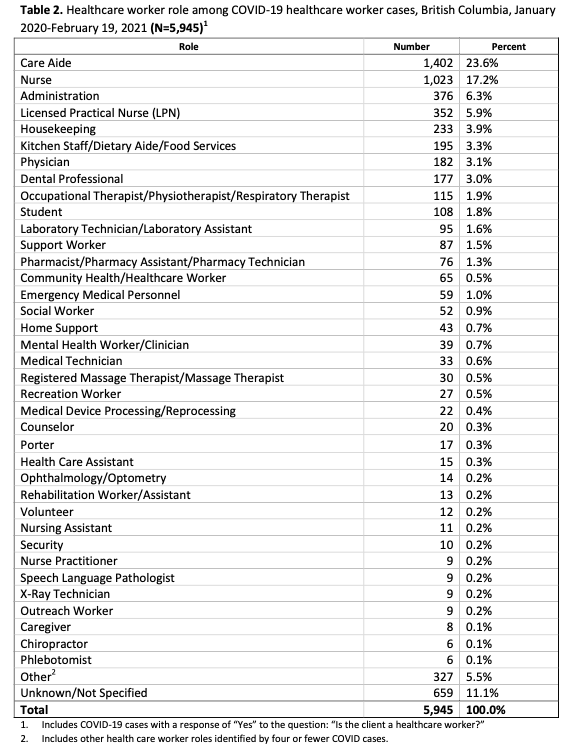
Each time I have reported the figures, I’ve been shocked at the increases. But latest data (up to Feb. 19) shows that while nearly 6,000 healthcare workers have been infected by COVID-19 since the pandemic began a year ago, the cases are starting to recede a little. Healthcare workers now represent 7.9% of all cases in B.C. up to Feb. 19 when there were a total of 75,546 cases. That compares to 8.1% when I last reported this just over a month ago.
With about 80,000 lab-confirmed, cumulative cases of COVID in B.C., one can project that as of March 1, more than 6,300 healthcare workers will have been infected if the proportion is the same, at about 8% of all cases.
Still, the latest figures represent what can be viewed as an improving situation, likely attributable to vaccinations in HCW that began at the end of 2020. Indeed, as I write this, hospital-based and community physicians and other frontline healthcare workers are finally being immunized with first or second shots. Hallelujah to that!
The latest figures show that care aides, who most often work in long-term care, have been most affected – 1,402 of them have been infected – accounting for 23.6% of cases among HCW. There are about 30,000 care aides working in B.C. which means about 5% have been infected.
It should be pointed out that not all HCW are infected on the job; they could have been infected anywhere in their communities.
Those who work in the nursing category – registered nurses, licensed practical nurses, nursing practitioners, and nursing assistants – are virtually even with care aides; about 1,400 working in nursing have been infected. There are about 53,000 nurses in B.C.
Here’s the list of all categories below. You will see at the bottom two large figures for categories called “other” and “unknown.” The “other” category represents HCW whose roles were identified by four or fewer COVID cases. The unknown category, which accounts for 11.1% of all cases, are cases of HCW who would not disclose or specify their roles when they got tested.
TIPS? Email me here: [email protected]
RELATED ARTICLES:
151% rise in COVID-19 cases in healthcare workers
Steep rise in COVID cases in healthcare sector
25% of COVID cases have been in healthcare workers
Growing number of cases among healthcare workers
The post HEALTHCARE WORKERS INFECTED BY COVID-19: latest data appeared first on Medicine Matters.
]]>The post Study challenges assumptions that warmer weather drives COVID-19 cases down. Sunshine is another story. appeared first on Medicine Matters.
]]>Remember those glorious yet all too fleeting days last summer when COVID-19 cases were at their lowest levels and we could actually socialize?
We speculated, and even assumed, the warmer weather and fresh outdoor air was the enabling factor for the short-lived visits with friends. But what does recent Canadian research say about the impact of climate?
In the first Canadian study to use daily meteorological data, researchers looked at the relationship between ambient temperature and COVID-19 incidence in four provinces. They analyzed over 77,700 COVID-19 cases from Alberta, British Columbia, Ontario, and Quebec from January to May 2020. They adjusted for factors like precipitation and wind speed and found a weak association (not statistically significant) between infections and ambient temperature. In other words, their findings did not support the hypothesis that warmer temperatures reduce COVID-19 transmission.
However, we can suspect the study might have been more persuasive one way or another if it had examined data throughout the summer instead of the winter to spring duration. Indeed, study co-authors Teresa To and Kimball Zhang said it’s possible that the relationship between temperature and COVID cases may not be as strong in colder months. In an emailed response to questions, To said:
“We did not find a statistically significant association between total cases or effective reproductive number of COVID-19 and ambient temperature. We were very cautious with our findings because trying to find a relationship between a specific weather factor and COVID-19, independent of other weather, biological, and social factors is very difficult since the effects of other factors simultaneously complicate and muddle the relationship we’re trying to find.
“Asserting a causal link between temperature and COVID requires caution as the spread of COVID is dependent on many factors and not temperature alone. That being said, in colder months, when people tend to stay inside more where air circulation is an issue, it may be a contributing factor to the increase of spread of COVID.”
She said that variants of concern may currently be leading to higher contagion. “But I caution you not to jump to conclusions too soon about causation when things are still evolving and knowledge is still new.”
“Once we get enough vaccine into people, we’re going to see a dramatic drop-off in the virus. We also know it doesn’t seem to spread as easily in the spring and summer months. So we’ve got a lot of things on our side.”
Yet the World Health Organization has tried to counter assumptions about climate and ultraviolet light with this infographic:
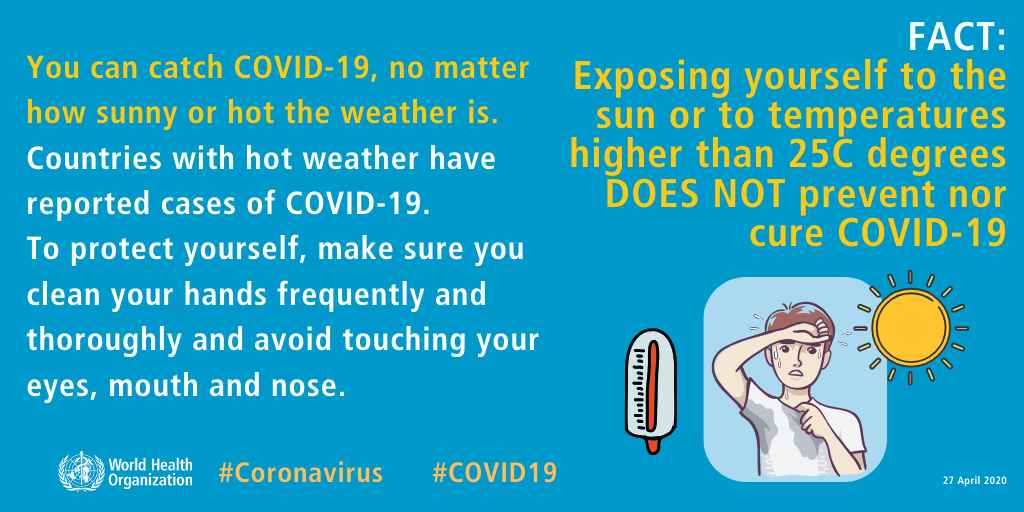
The public can be forgiven for feeling confused when public health experts make comments that seem to appear to conflict with the evidence or with each other. Vaccinations – not changing seasons – remain our best hope for reducing cases of COVID, not sunbathing.
Dr. David Fisman, an epidemiologist and professor at the University of Toronto, said research on associations between seasons, weather and COVID-19 is complex. And there’s long been a search for the interplay between infectious diseases and environmental factors.
“Ground-level ozone, temperature, and UV radiation are all extremely seasonal, as are humidity, precipitation, and other air pollutants. As well, school terms and holiday vacations all happen with periodicity so teasing apart effects in ecological data can be really challenging.”
The post Study challenges assumptions that warmer weather drives COVID-19 cases down. Sunshine is another story. appeared first on Medicine Matters.
]]>The post Lawsuit against Dr. Henry and BC government makes for strange allies. Including a former premier. appeared first on Medicine Matters.
]]>By PAMELA FAYERMAN
The last time I communicated with former Newfoundland premier Brian Peckford, he was trying to draw attention to the shortage of physicians on Vancouver Island.
Peckford, who was a Progressive Conservative premier from 1979 to 1989, moved to Vancouver Island in 1993. This week, I exchanged emails with him because I was surprised to see his support for a lawsuit against Dr. Bonnie Henry and the BC government.
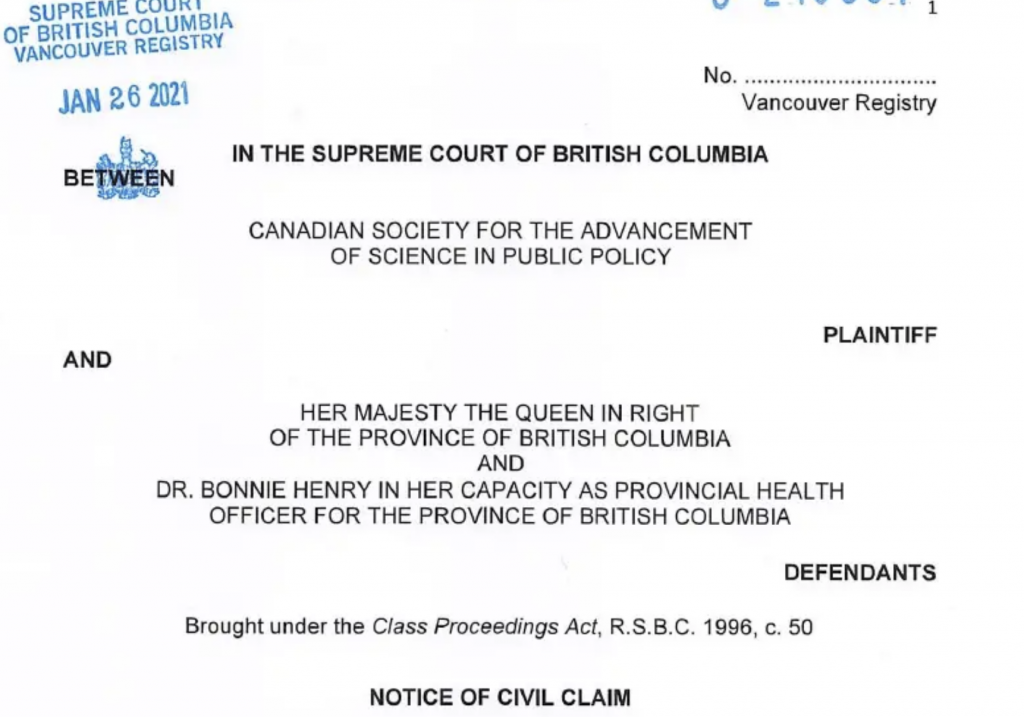
The lawsuit, filed late last month, is spearheaded by Kip Warner and a non-profit group calling itself the Canadian Society for the Advancement of Science and Public Policy. The lawsuit alleges many things, like the government and Dr. Henry have misrepresented the severity of COVID-19 which, the plaintiffs contend, is no worse than seasonal influenza.
They allege public health orders are draconian and have led to economic ruin for many, with more drug overdose deaths, suicides, depression, and unemployment besides other harms. They are seeking to have the Supreme Court of B.C. certify the lawsuit as a class action proceeding and ultimately overturn emergency public health orders. The government has not yet filed a statement of response.
The group suing the government has a GoFundMe campaign and is seeking $100,000 from donors to cover legal fees. At the time of writing this post, they had raised $26,758 from 181 donors, including a $100 donation from Peckford and his wife. Most of the donations are from anonymous contributors. The single biggest is a $10,000 contribution.
I asked the former premier a few questions: why he’s aligned himself with this lawsuit by contributing money to the fundraising, what he’d be doing differently if he was still premier, and whether he thinks that pandemic public health orders and other measures have gone too far.
Peckford said:
“If I was Premier I would have been opposed to the harsh measures used. Often I was outside the mainstream of what the premiers did or said.”
Then he drew upon his involvement in the constitutional patriation process and the drafting of the Charter of Rights and Freedoms, some of which, he said, came from the Newfoundland delegation.
“Charter provisions have been violated without, for want of a better phrase, due process, federal and provincial involvement, and extensive consultation with the people (and) groups affected. Additionally, much so-called ‘science ‘ was not science at all but a perversion of the same. The Great Barrington Declaration Comes to mind and the great work done by the scientists involved in that effort. The American Institute For Economic Research is a valuable resource.”
Not surprisingly, the lawsuit has spurred many to make bizarre and highly offensive allegations. One individual, who wrote to me after my first story about the lawsuit, predicted there would be a “new Nuremberg Trial” to prosecute politicians and others who are “blood guilty for all the lives the lockdowns are taking.”
The letter writer continued:
“The more lawsuits the better. It is a genuine case, by the way. When this “pandemic” is over, we’ll need a Truth and Reconciliation Commission to name every official, politician, executive, medical and media mogul whose greed and cowardice enabled this globally devastating plandemic (sic). A new Nuremberg Trial will occur eventually. All those siding with the governments’ lockdown measures, and all those being silent and all those going along to keep their jobs, or for some other reason are blood guilty for all the lives the lockdowns are taking. You have snatched our liberty and smile away and restricted our basic human right to breathe, move, mingle and work on this planet earth in the name of a re-branded flu. You do not have any valid data or logic to support or implement the current Covid restrictions. Stop this cruelty to humans. The PCR test is medical fraud. The W.H.O admits it has been misused. All the lockdowns are based on models that use inaccurate PCR data.”
So that, folks, is the rather deranged mindset of those with nothing but disdain for what governments across the country have tried to do during the pandemic in a bid to reduce deaths and hospitalizations.
EMAIL: [email protected]
The post Lawsuit against Dr. Henry and BC government makes for strange allies. Including a former premier. appeared first on Medicine Matters.
]]>The post The actual evidence for vitamins and supplements in COVID-19 prevention, treatment appeared first on Medicine Matters.
]]>GUEST POST BY DR. SCOTT LEAR
The pandemic has led to a surge in supplements as people hope to ward off COVID-19. Of these, vitamins C and D, along with zinc and melatonin, have gained particular attention.
Should we use supplements to help prevent or treat COVID-19 ? What is the evidence?
Vitamin C
Vitamin C is a water-soluble antioxidant needed to increase the production and function of immune cells. Long touted as a ‘cure’ for the common cold, this has never been realized. At most, regular vitamin C may shorten the duration of a cold, but only by about 8% (about 10 hours over a five-day cold).
The recommended intake is between 75 mg to 90 mg per day (a large orange, one cup of broccoli, a small red pepper). While excess amounts are excreted in the urine, mega-doses can result in intestinal discomfort.
Pre-pandemic studies have suggested vitamin C may benefit people suffering from sepsis (an extreme reaction to infection that can lead to organ damage and death). In these studies, vitamin C is delivered intravenously at doses around fifty times that of dietary recommendations. However, a study on hospitalized COVID-19 patients in China one year ago found no difference in need for ventilation and mortality while it did demonstrate a potential benefit for critically ill patients. Although a number of studies are underway, vitamin C isn’t recommended for treatment.
Vitamin D
Vitamin D is a building block for bones and many steroids in the body. The main source is from the sun. However, with concerns of skin cancer, food sources (oily fish and fortified milk) have taken over. One cup of fortified milk provides approximately 20% of the daily recommended 600 IU intake. Having too much vitamin D is unlikely through natural sources, but taking mega-doses through supplements can result in toxic effects.
People with darker skin and higher amounts of body fat tend to have lower levels of vitamin D, and hospitalizations and deaths from COVID-19 have been greater in these two populations. Subsequent cross-sectional studies have reported a higher risk for COVID-19 in people with vitamin D deficiency. Small randomized trials in hospitals have reported vitamin D supplementation associated with faster clearing of infection and severity, but a larger study in preprint found no difference. Dozens of trials are currently underway to investigate its role in the prevention and treatment of COVID-19.
As a result of the lack of robust evidence thus far, vitamin D is not recommended. However, many health agencies recommend vitamin D supplementation during the winter months and in people with darker skin living away from the equator.
Zinc
Zinc helps fight off infections and keeps the immune response from getting out of control. Zinc may also reduce the severity and duration of the common cold. People who took zinc lozenges (twice daily recommended amount) reduced the duration of their colds by 40%.
The daily recommended zinc intake is between 8 to 11 mg. Most people get sufficient amounts from meat, dairy products, beans, and peas. While overt zinc deficiency is rare in Canada, as many as one-third of adults over 60 years may not be meeting these recommendations.
It’s unknown whether zinc has any effect on the COVID-19 virus. Lab-based studies have suggested mechanisms by which zinc may reduce the risk for infection (reviewed here). A retrospective study in preprint found people with low zinc levels had worse outcomes from COVID-19.
However, a non-randomized study found no effect of zinc supplementation on mortality in people hospitalized for COVID-19 and a number of studies are in process. A just-published, much-anticipated study by the Cleveland Clinic investigating supplementation with ascorbic acid (vitamin C) and zinc found no benefit when it came to reducing the duration of COVID-19 symptoms.
Melatonin
Melatonin is commonly known as the sleep hormone. Its release is suppressed by exposure to light resulting in lower levels during the day. Besides promoting the onset of sleep, melatonin is involved in immune function and has anti-inflammatory and antioxidant properties.
Melatonin levels decline with age. As a hormone that your body naturally produces, there is no recommend dietary amount of melatonin. However, most foods contain trace amounts while cherries, nuts, eggs, milk and fish contain higher amounts.
Early on in the pandemic, melatonin was identified as a potential treatment to blunt the effects of COVID-19. A study in 26,779 tested for COVID-19 infection found people taking melatonin had a 52% lower chance of being positive and an observational study currently in preprint suggests treatment with melatonin is associated with positive outcomes in COVID-19 patients requiring intubation. However, given these studies are observational, more evidence is warranted and randomized trials are currently investigating its potential.
The bottom line
The limited studies to date have investigated the use of mega doses of these supplements in the treatment of COVID-19 and shouldn’t be translated to prevention with over the counter doses. In societies where healthy food is readily available, overt nutrient deficiencies are rare. A balanced diet, regular activity, and sufficient sleep are recommended to keep your immune system functioning. Wearing a mask, frequent handwashing and physical distancing remain the best strategies for reducing your chances of getting COVID-19.
Scott Lear is a professor in the Faculty of Health Sciences at Simon Fraser University. He holds the Pfizer/Heart & Stroke Chair in Cardiovascular Prevention Research at St. Paul’s Hospital.
He has been an outspoken advocate for mandatory masks during the pandemic. He writes the weekly blog Feeling Health with Dr. Scott Lear.
RELATED:
The post The actual evidence for vitamins and supplements in COVID-19 prevention, treatment appeared first on Medicine Matters.
]]>The post How long will vaccines protect us from COVID-19? Vancouver researchers get grant to find out. appeared first on Medicine Matters.
]]>BY PAMELA FAYERMAN
Blood samples from residents and staff of long term care (LTC) facilities will provide precious clues into how the immune system reacts to both COVID-19 infections and vaccinations.
Vancouver researchers at Providence Health Care, Simon Fraser University, UBC and the BC Centre for Excellence in HIV/AIDS have been granted over $1 million from the federal government to conduct and analyze blood draws from residents and staff of LTC facilities before and after vaccinations. That will allow experts to learn how to understand more about immunity so they can learn how to protect individuals who live and work in the facilities from future outbreaks. Healthcare workers in acute care facilities will also be included in the blood analysis research.
No one knows for sure yet how long immunity to COVID-19 will endure after vaccinations and/or infections. Will we require shots on an annual basis as is the case for protection from influenza? Perhaps, especially the elderly with less robust immune systems.
Principal investigator Dr. Marc Romney said in an interview that hundreds of blood samples have already been collected – including from individuals who died at Holy Family Hospital during an outbreak last year. Their blood has been banked as will all other samples drawn from study participants who will be asked for at least four specimens over a one-year period, including before vaccination, a month after and then again after their second vaccine doses. (Blood samples from deceased individuals will obviously not be useful for post-vaccination research).
The durability of the immune system response will be evidenced by various components including antibodies, T-cells, B-cells and cytokines.
Dr. Romney, the clinical associate professor at UBC and medical leader for medical microbiology and virology at St. Paul’s Hospital, said the hypothesis is that immunosenescence is a defining factor in immune durability. Immunosenescence is the gradual deterioration of immune systems as individuals age which affects the capacity to respond to infections and to maintain long-term immune memory acquired by infection or vaccination.
“The elderly have fragile white blood cells. They’re relatively immune compromised so it’s important to know how durable their vaccine protection is for them,” he said.
Since everyone will want the results “yesterday,” Romney said researchers will release interim results in stages to help with vaccination planning in 2022 and beyond. Romney has also been active in the development of pre-flight rapid testing protocols at the Vancouver International Airport.
The study will utilize state of the art technology that helps analyze vaccine-induced immunity. The research is part of the federal government’s COVID-19 Immunity Task Force (CITF). Scientists across Canada have been asked to conduct research that helps answer what proportion of the general population has antibodies to COVID-19; how long immunity lasts after infections; what antibody tests are the best; and how long individuals are protected against COVID after being vaccinated.
In Alberta, teams will look at vaccine-induced immunity as well as whether sewage wastewater can be used as an early warning system to detect outbreaks in LTC facilities. Wastewater samples from selected LTC facilities in Edmonton will be analyzed to determine whether the virus is circulating even before residents and staff develop symptoms. If levels of COVID biomarkers are detected, then it would trigger rapid testing to identify those who are infected to help prevent the spread of the disease.
EMAIL: [email protected]
The post How long will vaccines protect us from COVID-19? Vancouver researchers get grant to find out. appeared first on Medicine Matters.
]]>The post As vaccinations resume, health pros cautioned about selfies on social media appeared first on Medicine Matters.
]]>COVID-19 vaccinations are expected to resume again in the next few weeks after a lull due to vaccine scarcity from suppliers. Selfie photos posted on social media of individuals getting vaccinated can trigger negative emotions on the part of those waiting for vaccinations. A commentary on this is by Ben Huang, an emergency medicine resident at the University of B.C. who is also a Global Journalism Fellow at the Dalla Lana School of Public Health at the University of Toronto.
BY BEN HUANG
As doctors across Canada receive COVID-19 vaccines, many are sharing photographs on social media to inspire hope and to encourage others to get vaccinated too.
This has sparked controversy around “vaccine selfies,” as other doctors say the pictures provoke anxiety, anger and envy.
The debate among doctors over how to use social media is merely the tip of the iceberg, with inequalities in Canada’s slow and irregular vaccine rollout at the root of the frustrations.
Studies over the past decade have demonstrated links between browsing social media and depressive symptoms, especially when online content triggers envy. And during the COVID-19 pandemic, vaccine envy is inevitable, with vaccines being limited and the pandemic continuing to rapidly grow.
By all means celebrate, but celebrate privately….We get it—we’re happy for you. Just don’t rub salt in our wounds.
Social media triggers
For some health-care workers, social media selfies are an unwelcome trigger.
“Social media is complicated,” says Dr. Amelia Yip, a cardiologist in Waterloo, Ont., who recently received her first dose vaccine. “Even within the healthcare profession, there are people who should be getting it before others. But the way it’s being rolled out doesn’t always work that way.”
“The way the distribution is happening, it feels like there isn’t a coordinated effort. It feels under-appreciative for healthcare workers, or even those at risk, not just doctors,” says Dr. Yip.
Canada’s vaccine rollout has been highly variable between provinces. In Ontario, for example, almost 19% of vaccinated people have completed both doses, compared to only 1.5% in British Columbia.
And in Québec, where second doses are being postponed significantly until mid-March, no one has yet received two doses.
Dr. Yip says there are pockets of people who have been missed in her local rollout, and that at her hospital, cardiologists had to remind authorities that they, too, are involved in critical care.
Meanwhile, says Dr. Yip, it’s been doubly frustrating to see vaccine selfies posted by people who don’t work on the frontlines.
“Yesterday, a completely non-medical person who’s an accountant and happens to work at a Toronto hospital got it. When you see someone not even working [with COVID-19 patients] getting it, it feels like the person is jumping the queue.”
Anger and resignation
The vaccine rollout in B.C. has featured similar criticisms and controversies around queue-jumping by doctors and administrators.
Dr. Alan Drummond, an emergency physician in Perth, Ont., where frontline workers are still waiting for word of vaccines, says: “You have to take the broader context to understand where some of the disappointment and anger is coming from. For at least 10 months, ER physicians and nurses were dealing with a novel virus that has the potential to be quite deadly. I don’t know anybody in my sphere who shied away from the responsibilities of looking after patients—nobody.”
Dr. Drummond says the initial arrival of vaccines in Canada was met with hope and enthusiasm, and that it was “entirely appropriate” that doctors celebrated on social media as a sign of the beginning of change.
But as selfies continue to get posted online, Dr. Drummond says he and his colleagues are beginning to feel resigned and angry.
“The inequities are starting to show…. We need an appropriate queue—we certainly aren’t in it. And [the selfies are] the icing on the cake.”
Impacts of stress
Stress due to providing care to coronavirus patients has significant consequences. Frontline doctors, nurses and therapists are burned out. Tragically, 35-year-old Dr. Karine Dion recently died by suicide. Emergency and intensive care doctors have also reported feeling overwhelmed.
Dr. Sarah Giles, a rural family and emergency doctor in Kenora, Ont., says her community will not be receiving vaccines until April.
“When we look at inequalities, we know that there is a lifespan discrepancy between living in northwest Ontario and in southern Ontario. As my friend said, we’re at the end of the supply for fruits and vegetables and you can tell: We’re at the end for vaccines as well.”
And especially in rural communities, says Dr. Giles, every healthcare worker is paramount.
“We have human resources issues. If we lose a couple of doctors or nurses, it’s going to be a big problem.”
For Dr. Giles, who lives alone, vaccine selfies have been personally anxiety-provoking; she says when she gets vaccinated, she will not post a selfie.
As for Dr. Drummond, he has this message for doctors: “By all means celebrate, but celebrate privately. Just don’t do it so publicly when a lot of your colleagues who are dealing with their own anxieties and fears. We get it—we’re happy for you. Just don’t rub salt in our wounds.”
This article is republished from The Conversation under a Creative Commons license. Read the original article.
RELATED ARTICLES:
Physicians face disciplinary action for queue jumping
Investigations over into hospital doctors who jumped queues for 2nd COVID-19 shots
The post As vaccinations resume, health pros cautioned about selfies on social media appeared first on Medicine Matters.
]]>The post COVID-19 cases rise 34% among B.C. healthcare workers in past month alone appeared first on Medicine Matters.
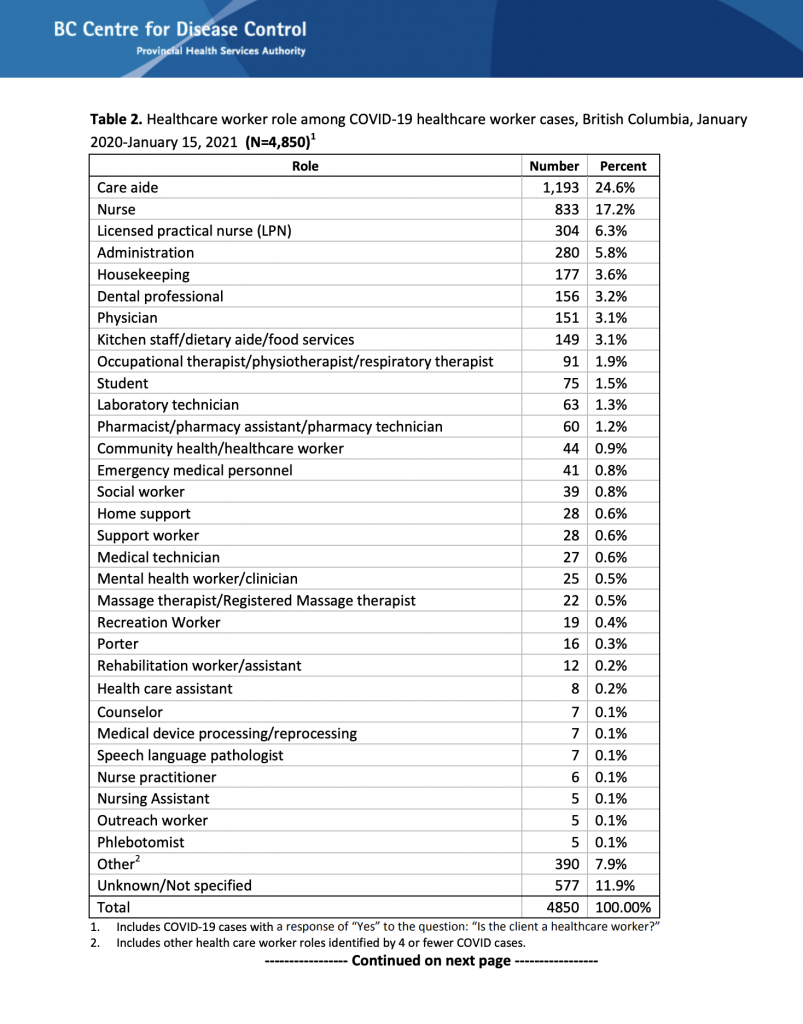
]]>COVID-19 infections continue to rise amongst B.C. healthcare workers as data just released shows the cumulative number of infections rose 34% in the past month, to 4,850.
The count provided by the B.C. Centre for Disease Control only goes up to January 15 when there were a total of about 60,000 COVID cases in the province. As of today, there are over 68,000 cases so it is likely there have now been somewhere around 5,400 infections among healthcare workers since the pandemic began. In mid-December, there were 3,624 cumulative cases among healthcare workers.
The good news, if you can call it that, is that COVID-19 infections among healthcare workers continue to account for just over eight percent of all cases in B.C. That proportion has not risen for a few months. As well, first vaccinations have been completed among all staff and residents of long-term care facilities so infections in LTC sector staff should start to fall.
Care aides who most commonly work in LTC facilities and nurses in various categories – RN, nurse practitioner and licensed practical – continue to head the list. As you will see from the table below, care aides account for about 25% of all infections in the healthcare sector while nurses are a close second, accounting for another 24%.
Cases among dental professionals (156) slightly outnumber those in physicians (151). The only professionals who’ve been vaccinated so far in B.C. are those who work in intensive care units, emergency departments and COVID units. That means healthcare workers like nurses, dentists and physicians not providing direct care to COVID-19 patients have not yet been inoculated.
The government and Dr. Bonnie Henry continually emphasize that not all COVID infections are contracted on the job. But it is clear that wherever healthcare workers acquire COVID-19, they are vulnerable and carry a heavy burden when it comes to the virus. A category called unknown/unspecified has 577 cases. That means individuals answered yes when they were asked during testing if they worked in healthcare but they declined to provide more information about their occupation.
In an ideal world, every healthcare worker would be getting vaccinated now. But the supply for most of February has dried up because of modifications to vaccine production facilities in Belgium.
 RELATED ARTICLES:
151% rise in COVID-19 cases in healthcare workers
Steep rise in COVID cases in healthcare sector
25% of COVID cases have been in healthcare workers
Growing number of cases among healthcare workers
The post COVID-19 cases rise 34% among B.C. healthcare workers in past month alone appeared first on Medicine Matters.
]]>The post Lawsuit against Dr. Henry and B.C. government seeks to overturn COVID-19 public health orders appeared first on Medicine Matters.
]]>Dr. Bonnie Henry and the provincial government have been served with a lawsuit filed in the Supreme Court of B.C. that alleges pandemic emergency public health orders are unjustified.
The lawsuit spearheaded by Kip Warner and a non-profit group calling itself the Canadian Society for the Advancement of Science and Public Policy makes numerous allegations like COVID is no worse than seasonal influenza. They allege that Henry and the government have misrepresented the severity of COVID-19.
The plaintiffs are seeking to have the court certify the lawsuit as a class action proceeding. They allege public health orders have led to more drug overdose deaths, suicides, depression, unemployment, and bankruptcies.
Warner says on his website he is a software developer specializing in artificial intelligence. He has formerly been labelled a conspiracy theorist for allegations about 911. According to the referenced National Post article, in 2011 he wrote a long public letter to the government suggesting the true blame for the coordinated jet plane attacks lies with a usurious “cabal of Rothschild banksters.”
In an interview, Warner said the society is not made up of a bunch of conspiracy theorists. Members backing the legal action “don’t deny that COVID exists” but do contend the government exceeded its powers by making orders based on “controversial claims” about the severity of COVID.
A Go Fund Me campaign to finance the litigation has to date raised has raised under $20,000 from 120 donors. The target for fundraising is $100,000.
Citadel Law Corporation is the Vancouver firm representing the plaintiffs. The law firm says on its website that it specializes in strata property law, estate litigation and tenancy matters.
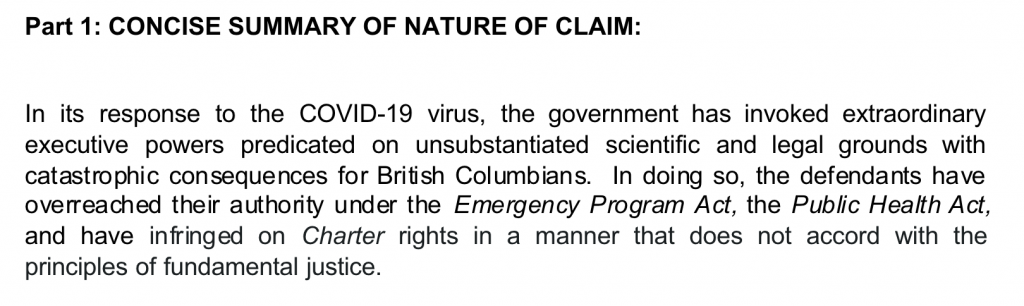
Staff in the ministry of health said the government would not be commenting on the lawsuit because it is “currently before the courts.”
The post Lawsuit against Dr. Henry and B.C. government seeks to overturn COVID-19 public health orders appeared first on Medicine Matters.
]]>The post Another clever use for shipping containers in the pandemic era: safe visits with loved ones in long term care appeared first on Medicine Matters.
]]>Converted shipping containers have been turned into tiny homes, man-caves, backyard offices, and even swimming pools. Now inventive individuals have created another novel use for them – a place for families to visit their loved ones in long-term care.
In the Fraser Health region, the Queen’s Park Healthcare Foundation got a government grant to help purchase a shipping container now on site at the Queen’s Park Care Centre. The New Westminster healthcare facility serves 148 long term- care residents and 77 rehab patients. It has had multiple COVID outbreaks in the past year – two outbreaks in long-term care involving 10 residents, five staff and four deaths. And three outbreaks in acute care involving 20 patients, four staff and one death.
The repurposed container has been insulated, heated, furnished and equipped with an intercom system. Families enter the Britco modular container from one entrance while residents enter from another. They are separated by a plexiglass partition. While it sounds a little like jail visits, it certainly beats outdoor window visits. Indeed, it’s a private, safe way to have visits while the pandemic is still claiming lies in the long-term care sector.
The Manitoba government is believed to be the first in Canada to make a big ($17.9 million) purchase of shipping containers from a construction company last fall. Modifying the units can cost up to $200,000.
Karl Segnoe, whose 92-year-old grandmother lives there said in a press release: “I have every confidence in the staff to keep my grandmother safe, but I fear social isolation is taking a toll on her well-being. Being able to visit as a family will be huge because my grandmother is such an important person in our lives.”
Families must reserve visits and still wear masks. They are also pre-screened with temperature checks and other measures to help detect COVID symptoms. Long term care residents are accompanied by a staff worker who remains for the duration of the visit. Every surface is disinfected in-between visits.
Elizabeth Kelly, the executive director of the Queen’s Park Healthcare Foundation, said:
“We had the space, so I applied for a $25,000 federal grant. All of us at Queen’s Park Care Centre are looking forward to the day when COVID-19 is behind us and we can remove the partition in the visitor centre so families can celebrate together and hug each other. The pandemic has taught us that the small things in life are really the most important.”
Fraser Health has not yet responded to questions about how much the shopping container cost in total.
Exterior of the shipping container. Photo courtesy of Fraser Health and the Queen’s Park Healthcare Foundation.
The post Another clever use for shipping containers in the pandemic era: safe visits with loved ones in long term care appeared first on Medicine Matters.
]]>The post Vancouver startup bet it would sell a bunch of ventilators. It was wrong. appeared first on Medicine Matters.
]]>When the COVID-19 pandemic struck, there was generalized panic about whether Canada would have enough mechanical ventilators, ICU beds and healthcare professionals for critically ill COVID patients.
As the world watched the situation unfold in China, Italy and Spain last winter, political leaders responded with bold plans to boost the domestic production of ventilators. In the U.S., President Donald Trump signed an order under the Defence Production Act compelling General Motors to produce ventilators for hard-hit hospitals. In Canada, Prime Minister Justin Trudeau announced a deal with four Canadian companies – Victoria’s StarFish Medical (StarFish Product Engineering Inc.), CAE Inc., Thornhill Medical Research Inc., and Ventilators for Canadians to produce 30,000 ventilators.
“We need a sustainable, stable supply of these products and that means making them at home,” Trudeau said in April.
A Vancouver startup company saw an opening and quickly assembled a team of engineers to design and manufacture a locally-made ventilator containing fewer than 60 components. Ocalink Technologies Inc., gained emergency Health Canada certification for its trademarked Pantheon Emergency Ventilator (PEV) and announced it was taking orders for its lifesaving technology. In Saskatchewan, university researchers collaborated with clinicians at a Saskatoon-based company that also designed and built an emergency use ventilator. The Saskatchewan Health Authority placed orders for 100 but so far, none have been used in hospitals.
In B.C., Corbin Lowe, co-founder and CEO of Ocalink told me last spring: “This is a very exciting time for Ocalink as our first manufactured units can now ship, and we can bring our made-in-Canada solution to the world…we are in the position to manufacture in large quantities and scale up to 1,000 devices a day despite a currently constrained global supply chain.”
Recently, I re-connected with Lowe to ask how many units were sold to hospitals. The answer? Zero.
While it seemed like the situation elsewhere dictated demand for more ventilators, Lowe said across North America, critical care physicians realized fairly early that only certain COVID cases required mechanical ventilator support and by May, the demand for mass production of new units waned.
“Ventilators are quite an invasive, traumatic experience for patients and, over time, physicians realized that COVID doesn’t mimic acute respiratory distress syndrome which often does require ventilators,” he said.
At Royal Columbian Hospital (RCH) where there are 30 ICU beds – 16 of them equipped with ventilators – there has never been a time during the pandemic when there weren’t enough ventilators. But questions about which COVID patients have required ventilators has always been given delicate consideration. RCH medical director Dr. Steve Reynolds said this in an interview today: “I know we had many discussions about getting more ventilators and there were lots of orders that went in across Canada. I even looked at different types as I joined the panic but to be honest, we leaned into it and we’ve been managing with what we have.”
Reynolds is leading a case series study to help answer which patients require highly invasive mechanical ventilation and other best practices for COVID patients. He agrees that as the pandemic progressed, doctors have learned from each other. And experiences in big metropolitan areas like New York influenced care decisions here, especially when it came to determining which patients needed mechanical breathing support.
Reynolds, a specialist in internal medicine, infectious diseases and critical care, has been working on inventions to improve diaphragm conditioning in patients on ventilators so they can be weaned off mechanical breathing perhaps a little faster, thus reducing the risk of ventilator-induced lung injuries and other life-threatening complications like pneumonia and infection.
While inflamed and infected COVID lungs may appear to look the same as those in patients with pneumonia or serious lung infections, too much ventilation pressure can be risky, not only to the lungs but to other organs as well. Up to 30% of patients on ventilators experience face permanent difficulties after they are weaned off ventilators, according to medical literature.
The Lung Pacer catheter stimulates the phrenic nerve in patients on ventilators, to help condition the diaphragm.
Medical device technology that Reynolds is involved in is called Lung Pacer. It features a nerve-stimulating catheter inserted intravenously to activate the phrenic nerve and strengthen the diaphragm muscle. Doctors in Germany have been the first to trial it in COVID patients. The device is being developed by Lungpacer Medical Inc., a Simon Fraser University spinoff company.
“Ventilators can hurt the lungs but we’ve shown that if you activate the diaphragm, it can help,” said Reynolds. Ventilators can also cause brain cell death because of interruptions in signals from the lungs to the brain. “It’s very much a use it or lose it scenario,” he added, referring to the fact that relying on mechanical ventilation can cause weakness or even atrophy in various organs. The lungs, for example, can become stiff and scarred (fibrotic) from the oxygen blowing into the lungs as opposed to inhaling and exhaling in normal (non-assisted) breathing.
One measure that has worked pretty well to improve respiratory function in COVID patients has been placing them face down, in what is called the prone position. There are no magic bullets with COVID treatments, but Reynolds said prone positioning has become “a neat thing.
“We sometimes call it tummy time. It’s pretty remarkable how it changes oxygen needs for some people.”
Another aspect of his research involves imaging of internal organs to show what happens in real-time when patients – ventilated or not – are flipped over into the prone position by teams of healthcare professionals. A whole bundle of this kind of research is being funded by the RCH Hospital Foundation and the TB Vets Charitable Foundation Professorship in Critical Care at Simon Fraser University.
While shortages of ventilators have so far not been a problem, Reynolds said there’s always a worry about enough staff to tend to hospitalized patients. Health Minister Adrian Dix regularly updates the number of vacant beds there are in the province, to reassure citizens that the hospitals aren’t overflowing. But as Reynolds said:
“A bed is not a bed is not a bed. Ventilating patients or caring for all those in the ICU, or in COVID units, requires huge health care teams. Nurses are bearing the brunt of this and they are exhausted.”
RCH is one of a few hospitals in the Fraser Health region providing critical care for COVID patients. More than 2,000 COVID patients have been admitted to Fraser Health hospitals since the pandemic began. That is nearly two-thirds of all the patients across B.C. who’ve been hospitalized with COVID.
RELATED:
Why COVID patients are placed in prone positions
Hospital provides virtual followup care to patients discharged from ICU
The post Vancouver startup bet it would sell a bunch of ventilators. It was wrong. appeared first on Medicine Matters.
]]>